Every Lab I’ve raised has followed a similar arc: an adolescent phase where it genuinely feels like they have bottomless energy, followed by a noticeable settling somewhere around age three, and then a gradual, gentle decline that starts to show around seven or eight. Exercise needs shift constantly across that arc, and getting it wrong in either direction — too little or too much — causes real problems.
- Daily Exercise Baseline for Adult Labs
- Exercise Needs by Life Stage
- Signs Your Lab Is Under-Exercised
- Signs of Over-Exercising and Heat Exhaustion
- Structured vs. Free/Off-Leash Exercise and Mental Work
- Adjusting Exercise for Weather, Health, and Body Condition
- Working-Line vs. Show-Line Differences
- Sample Daily Exercise Schedule
- Frequently Asked Questions
Daily Exercise Baseline for Adult Labs (60–90 Minutes)
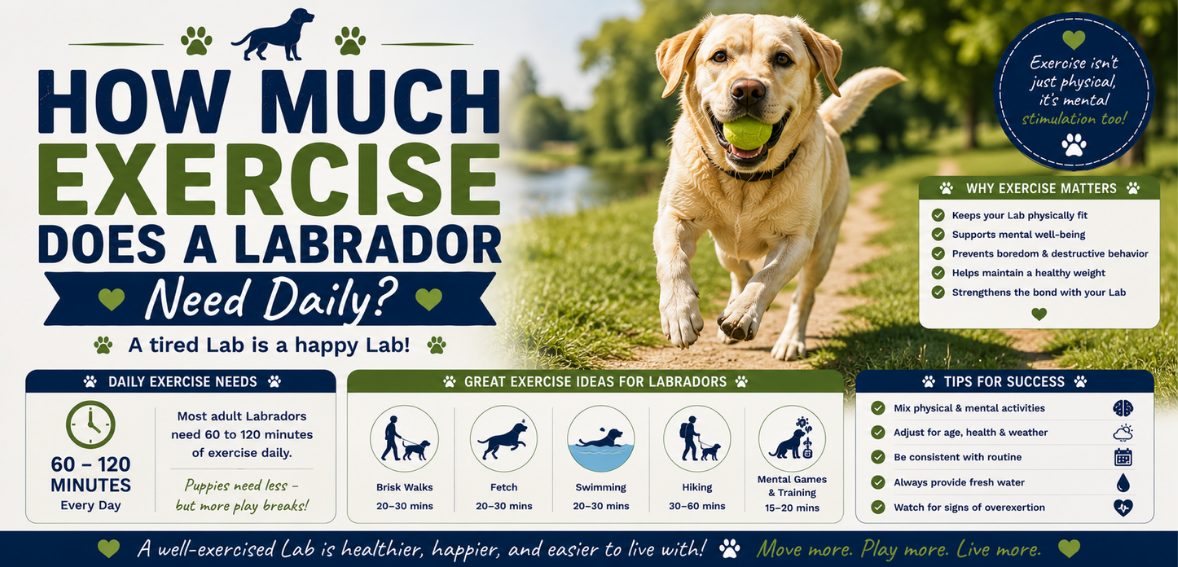
A healthy adult Labrador does best with 60 to 90 minutes of physical activity daily, ideally split across two or more sessions rather than one long outing. This should be a mix of aerobic exercise (walking, running, swimming, fetch) and mental engagement (training, scent work, puzzle feeders) — a purely physical routine without any mental component tends to leave a Lab under-stimulated even if the minutes add up.
Two walks a day can absolutely be enough, provided the total time and intensity land in that range and at least one session includes something more engaging than a leisurely stroll — a game of fetch, a training session, or off-leash sniffing time all count toward meaningful activity.
Exercise Needs by Life Stage (Puppy, Adult, Senior)
| Life Stage | Daily Exercise Guideline | Key Consideration |
|---|---|---|
| Puppy (2 months) | ~10 minutes, twice daily (structured) | 5-minutes-per-month-of-age rule; growth plates still open |
| Puppy (4 months) | ~20 minutes, twice daily (structured) | Avoid forced running, jumping, or repetitive impact |
| Puppy (6 months) | ~30 minutes, twice daily (structured) | Free play and exploration are separate from structured exercise |
| Adolescent (8–18 months) | Gradually increasing toward 60–90 minutes | Growth plates close around 14–18 months in large breeds; ramp up slowly |
| Adult (2–7 years) | 60–90 minutes | Split across sessions; combine physical and mental activity |
| Senior (7+ years) | 20–45 minutes | Shorter, gentler sessions; watch for joint stiffness and reduced heat tolerance |
The “5 minutes per month of age, twice daily” guideline refers specifically to structured, human-initiated exercise like leash walks — not self-regulated free play or exploration, which puppies naturally pace themselves during. Large-breed growth plates typically close around 14–18 months, so err on the later side when transitioning a young Lab to adult exercise volumes. See our full guide on puppy exercise: how much is too much for a detailed stage-by-stage breakdown.
Signs Your Lab Is Under-Exercised
- Destructive chewing, digging, or shredding household items
- Excessive barking or restlessness, especially in the evening
- Difficulty settling down or constant pacing indoors
- Gradual weight gain despite a consistent, appropriate diet
- Attention-seeking behaviors like jumping, mouthing, or nudging that escalate over time
Labradors are food-motivated and prone to obesity, so under-exercise compounds quickly — a dog burning fewer calories than it’s consuming gains weight, which then makes exercise harder and less comfortable, creating a difficult cycle to reverse. See our guide to Labrador weight and obesity management if this sounds familiar.
Signs of Over-Exercising and Heat Exhaustion
This popular saying encourages owners to exercise a Labrador into exhaustion, but pushing a dog well past healthy tiredness into genuine fatigue increases injury risk, joint stress, and — in hot weather — the risk of heat exhaustion or heatstroke. The goal is a dog that’s content and settled, not one that’s been run into the ground.
- Excessive panting that doesn’t settle with rest
- Lagging behind, stopping, or reluctance to continue
- Stiffness or limping in the hours after activity
- Excessive drooling, bright red or pale gums, or vomiting — seek emergency veterinary care immediately, as these can indicate heatstroke
- Disorientation, wobbliness, or collapse — this is a medical emergency
Labradors’ dense double coat, while great for cold water, makes them more prone to overheating in hot, humid weather than their water-loving reputation might suggest. Adjust intensity and timing accordingly — early morning or evening exercise in summer, and shortened sessions on hot or humid days.
Structured vs. Free/Off-Leash Exercise and Mental Work
Not all exercise needs to look the same, and variety genuinely helps:
- Structured exercise: Leash walks, jogging, and formal training sessions — controlled pace and predictable impact, good for building routine.
- Free/off-leash exercise: Safely enclosed yard time, dog park visits, or off-leash hikes where a Lab can set its own pace, sniff, and explore — this is often more mentally satisfying per minute than a structured walk.
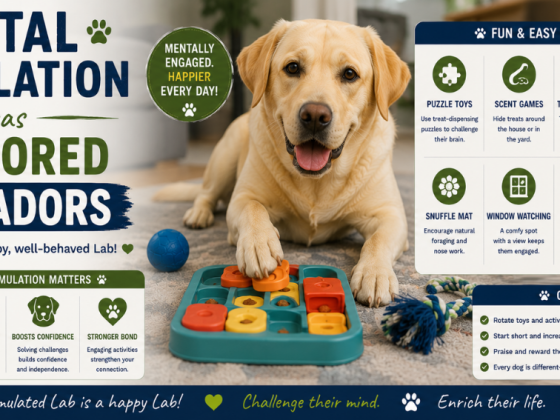
- Mental work: Puzzle feeders, scent games, and short training sessions tire a Lab out in a genuinely different way than physical exercise, and are especially useful on days when weather or injury limits physical activity.
See our guides to the best games to play with your Labrador and mental stimulation ideas for bored Labradors for specific activities to rotate in.
Adjusting Exercise for Weather, Health, and Body Condition Score
Exercise needs aren’t static — they shift with circumstances, and a good routine adapts rather than staying rigid:
- Hot or humid weather: Shift to early morning or evening, shorten sessions, and prioritize water access and shade breaks.
- Cold weather: Most healthy adult Labs tolerate cold well given their coat, but watch paws for ice or salt irritation.
- Injury or illness recovery: Follow your vet’s specific guidance rather than defaulting to the general baseline.
- Body condition score: Ask your vet for a body condition score (typically on a 1–9 scale) at every visit — an overweight Lab may need a gradual increase in low-impact activity like swimming, paired with dietary changes, rather than an abrupt jump in exercise intensity.
Working-Line vs. Show-Line Labrador Differences
American (field/working) Labradors are typically leaner and higher-energy, often needing exercise toward the upper end of the range — sometimes more for dogs actively used in hunting or field trial work. English (show/bench) Labradors tend to be stockier with a calmer disposition, often content with exercise toward the lower end of the 60–90 minute range. Most family pet Labs fall somewhere in between, but if your dog seems consistently under-tired at 90 minutes or consistently restless at 60, adjusting toward your specific dog’s line and individual energy level matters more than rigidly following an average.
Sample Daily Exercise Schedule
- Morning (20–30 minutes): A brisk walk or light jog, ideally including some off-leash sniffing time if safely possible.
- Midday (10–15 minutes): A short training session or puzzle feeder to add mental engagement without much physical strain.
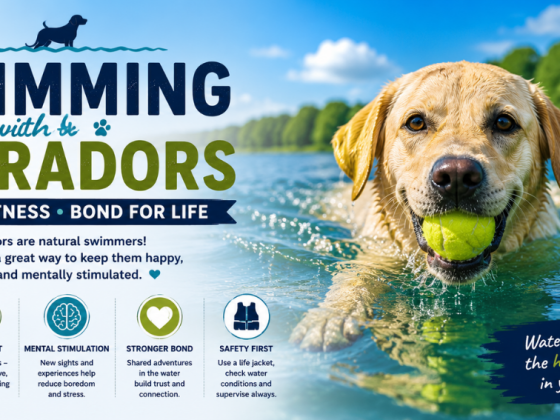
- Afternoon/Evening (20–30 minutes): A second walk, a game of fetch, or swimming if available — the higher-intensity session of the day.
- Evening (10–15 minutes): Calm wind-down activity, like a slow sniff-focused walk or gentle play, to help settle before bedtime.
This totals roughly 60–90 minutes of combined physical and mental activity, adjustable up or down based on your individual dog’s age, line, and body condition.
Frequently Asked Questions
How many minutes of exercise does an adult Labrador need per day?
Roughly 60 to 90 minutes of varied physical activity daily, split across two or more sessions, combined with some mental stimulation.
Is two walks a day enough for a Labrador?
Yes, if the combined time and intensity fall within the 60–90 minute range and at least one walk includes something more engaging than a slow stroll, such as off-leash sniffing, fetch, or training.
Can you over-exercise a Labrador Retriever?
Yes. Overexertion increases injury and joint-stress risk, and in hot weather raises the risk of heat exhaustion or heatstroke. Watch for excessive panting, lagging behind, or stiffness after activity, and seek emergency care for disorientation, collapse, or pale gums.
How much exercise does a Labrador puppy need compared to an adult?
Much less. Puppies should follow the 5-minutes-per-month-of-age rule for structured exercise (twice daily) to protect developing growth plates, gradually increasing toward adult levels only after growth plates close around 14–18 months in large breeds.
Does my Labrador need more exercise if it’s overweight?
Generally yes, but gradually — a sudden jump in intensity can strain joints in an already overweight dog. Combine a slow, low-impact exercise increase (like swimming) with veterinary-guided dietary changes rather than exercise alone.
Sources
- American Veterinary Medical Association (AVMA) — Exercise and Weight Management Guidance for Dogs
- VCA Animal Hospitals — Heatstroke in Dogs and Body Condition Scoring
- American Kennel Club — Labrador Retriever Exercise Requirements
- Veterinary orthopedic and rehabilitation literature on growth plate closure timing in large-breed dogs