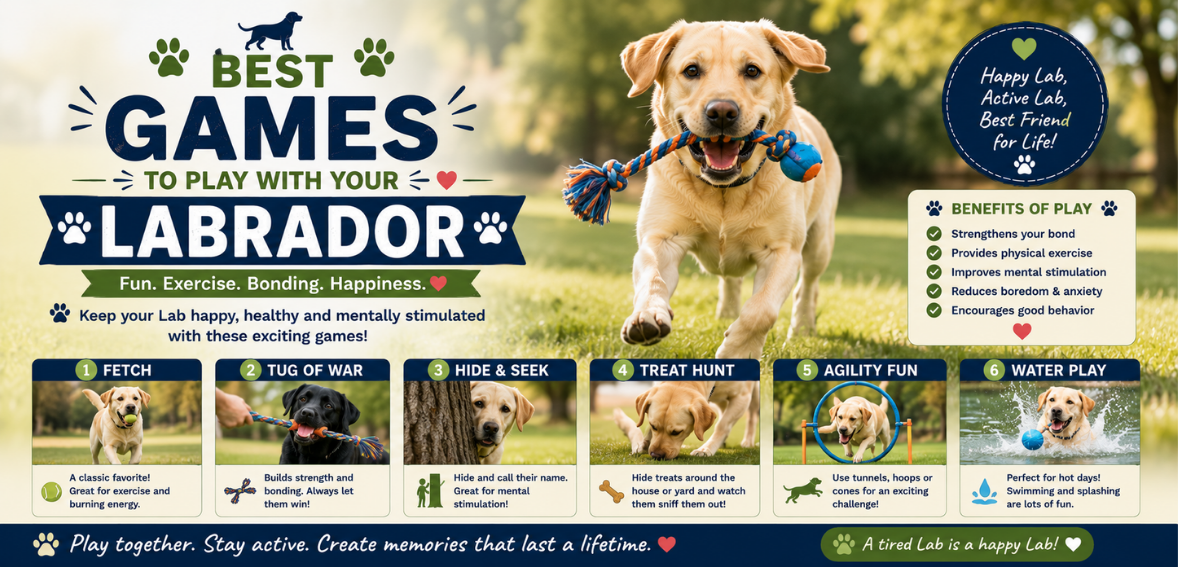
Labradors were bred to retrieve game across long distances and scent-track wounded birds, and that heritage shows up constantly in what actually tires mine out fastest — five minutes of a real scent game leaves her more genuinely worn out than twenty minutes of aimless ball throwing. The games below lean into those instincts rather than fighting them, organized by type with equipment, steps, and an energy rating for each.
Fetch and Retrieve-Based Games (Lab’s Natural Drive)
1. Classic Fetch
The most direct outlet for a Labrador’s retrieving instinct, and often the single most efficient way to tire one out physically.
- Throw the ball or dummy a moderate distance on flat, soft ground.
- Ask for a solid “drop” or “give” on return before throwing again.
- Build in short breaks every 5–10 throws to prevent overheating.
2. Two-Ball Fetch (Retrieve-and-Release Training)
Great for Labs who struggle to release the first ball — showing the second ball naturally encourages a faster drop.
- Throw the first ball and let your dog retrieve it.
- As they return, show the second ball rather than reaching for the one in their mouth.
- Throw the second ball once they drop the first, and repeat.
Scent and Nose-Work Games (Find It, Hide and Seek)
3. “Find It” Scent Game
Taps directly into the scenting instinct bred into retrievers for locating downed birds, and reliably tires a dog out mentally even with minimal physical movement.
- Say “find it” and toss a treat a short distance for your dog to sniff out.
- Gradually increase difficulty by hiding treats around furniture or behind objects.
- Progress to hiding treats in another room entirely once your dog understands the game.
4. Hide and Seek
Combines scent work with recall practice, rewarding your dog for finding and coming to you specifically.
- Have your dog wait or get someone to hold them briefly while you hide nearby.
- Call your dog’s name once, then stay quiet and let them search.
- Reward enthusiastically the moment they find you.
Tug of War Done Safely
5. Tug of War
Contrary to an old myth, tug of war doesn’t cause aggression when played with clear rules — it’s a legitimate, high-value outlet for a Labrador’s retrieving and mouthing instincts.
- Start the game yourself with a cue like “tug,” rather than letting your dog initiate by grabbing at random.
- Play with a clear “drop it” or “out” cue, practiced regularly outside the game too.
- End the game if teeth touch skin, and pause immediately if your dog gets overly aroused rather than pushing through.
- You decide when the game starts and ends — this is what keeps the game a controlled outlet rather than a habit-forming free-for-all.
Flirt Pole and Chase Games for High-Energy Labs
6. Flirt Pole
Essentially a giant cat toy for dogs — the flirt pole lets you control a high-energy chase game without needing a huge amount of open space, and it tires out even the most energetic adolescent Lab quickly.
- Move the lure along the ground in sweeping motions, letting your dog chase but not always catch it.
- Let your dog “catch” and briefly tug the lure every few passes to keep the game rewarding.
- Keep sessions short (5–10 minutes) given how physically demanding this game is.
Flirt pole games involve sharp turns and sudden stops that stress developing joints. Avoid this game — and any high-impact jumping or sharp-cutting play — until growth plates close, typically around 14–18 months in large breeds like Labradors.
Puzzle and Food-Dispensing Games
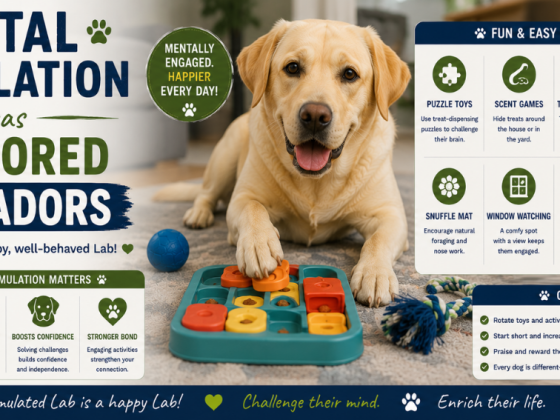
7. Snuffle Mat or Scatter Feeding
An easy, low-impact way to slow down a fast eater while providing genuine mental stimulation through scent work.
- Scatter a meal’s worth of kibble across a snuffle mat or open patch of grass.
- Let your dog sniff out each piece at their own pace, without help.
- Use this as a calm option on rest days or after a physically demanding session.
8. Stuffed Food Puzzle Toy
Freezing a stuffed toy extends the challenge significantly, making it ideal for crate time or independent play.
- Fill the toy with a mix of kibble and a soft filler like plain yogurt or canned pumpkin.
- Freeze for at least a few hours to extend how long the challenge lasts.
- Offer during crate time, alone time, or as a calm-down activity after high-energy play.
Water-Based Games for Labs Who Love to Swim
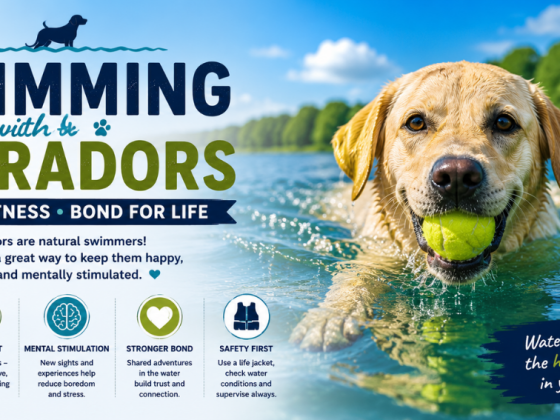
9. Water Retrieve
Combines the breed’s retrieving drive with swimming, a genuinely low-impact form of exercise that’s easy on joints — a great option for dogs managing early joint issues under vet guidance.
- Choose a safe, calm body of water with easy entry and exit points.
- Toss a floating toy a short distance and encourage your dog to swim out and retrieve it.
- Rinse and dry ears thoroughly afterward to help prevent ear infections.
10. Sprinkler Chase
A simple, low-cost hot-weather game that combines the breed’s water enthusiasm with a fun chase element.
- Set up a sprinkler in a safe, open area of the yard.
- Let your dog chase and pounce at the water on their own terms.
- Keep sessions short in very hot weather and ensure fresh drinking water is available nearby.
Games by Age and Energy Level
| Life Stage | Best-Suited Games | Games to Modify or Avoid |
|---|---|---|
| Puppy (under 14–18 months) | Find It, Hide and Seek, food puzzles, gentle fetch on soft ground | Flirt pole, high jumps, forced long-distance running |
| Adolescent/Adult | All games in this guide, in rotation | None specifically, but monitor for overexertion |
| Senior | Find It, scatter feeding, gentle water retrieve, short fetch sessions | Flirt pole, tug of war if any joint pain is present |
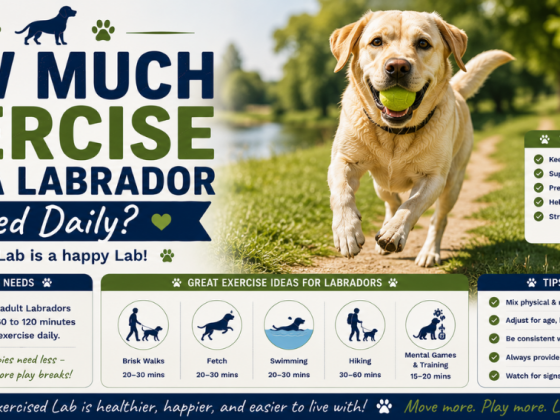
See our full guide to how much exercise a Labrador needs daily for how these games fit into an overall daily routine, and our mental stimulation ideas for bored Labradors guide for more low-impact options.
Safety Rules (Surface, Heat, Joint Impact)
- Surface: Favor grass, dirt, or padded surfaces over concrete or pavement for any game involving sudden stops, turns, or jumping.
- Heat: Move high-energy games to early morning or evening in hot weather, and watch for excessive panting or lagging as a sign to stop.
- Joint impact: Avoid repetitive jumping, sharp cutting movements, or forced long-distance running until growth plates close around 14–18 months, and modify high-impact games for dogs with known joint issues.
- Arousal levels: For tug and chase games specifically, end the session while your dog is still calm and engaged rather than overstimulated, which helps keep these games a controlled, positive outlet.
For rainy-day alternatives that keep these same principles indoors, see our guide to indoor activities for Labradors on rainy days, and our full guide to fetch and retrieving games for Labradors for more variations specifically built around this instinct.
Frequently Asked Questions
What are the best games to play with a Labrador?
Fetch, scent-based “find it” games, tug of war with clear rules, flirt pole chase games, and food puzzles all tap into a Labrador’s natural retrieving and scenting instincts, making them more satisfying than generic play.
What games tire out a Labrador fast?
Flirt pole play and intense fetch sessions tire a Lab out physically fastest, while scent games like “find it” are often more mentally exhausting per minute than physical play alone.
Are there indoor games I can play with my Lab?
Yes — “find it” scent games, hide and seek, snuffle mats, and stuffed food puzzle toys all work well indoors and provide genuine mental stimulation without needing much space.
What games are good for a Labrador puppy versus an adult?
Puppies do best with low-impact games like Find It, Hide and Seek, and food puzzles, avoiding high-impact games like flirt pole or forced running until growth plates close around 14–18 months. Adults can safely enjoy the full range of games in rotation.
Is tug of war bad for Labradors?
No, when played with clear rules — you start and end the game, a reliable “drop it” cue is practiced regularly, and the game is paused if your dog becomes overly aroused. Tug of war does not cause aggression when played this way.
Sources
- American Kennel Club — Labrador Retriever Exercise and Enrichment Guidance
- American Veterinary Medical Association (AVMA) — Exercise Guidance for Growing Puppies
- Veterinary orthopedic literature on growth plate closure timing in large-breed dogs