When I got my second Labrador from a health-tested breeder, the puppy itself was $1,500 — right in the middle of the typical range. What actually surprised me was the first-year total once the crate, food, initial vet visits, and a bout of puppy-proofing damage to my baseboards were added up: closer to $4,200, nearly three times the purchase price. That gap between “sticker price” and “real first-year cost” is exactly what trips up a lot of new owners, and it’s what this guide breaks down in full.
Average Labrador Puppy Price Range
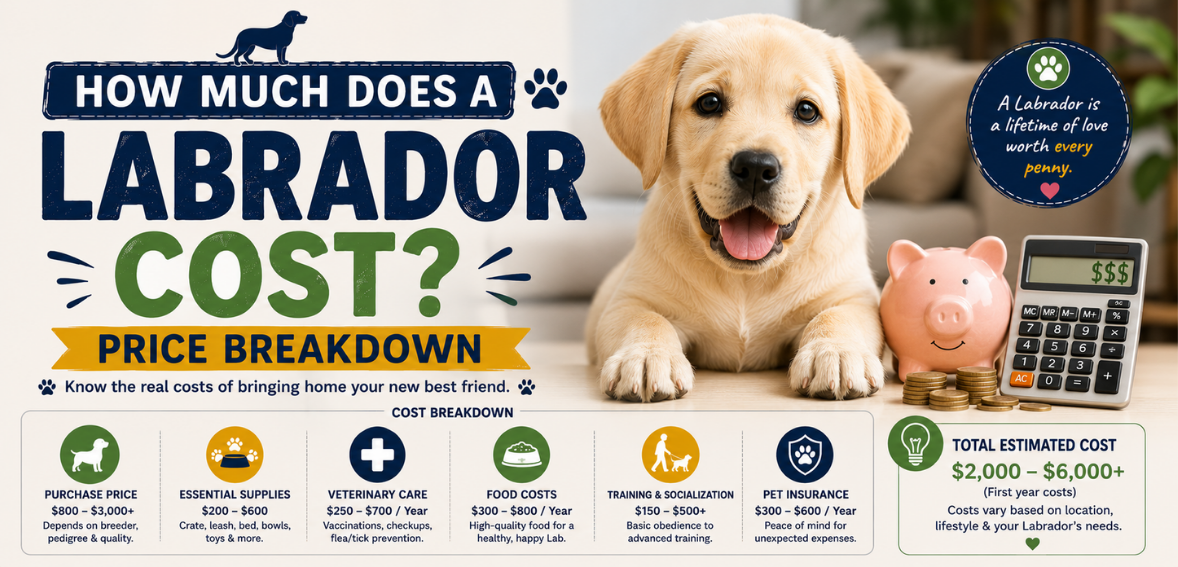
Across current market data, a Labrador Retriever puppy from a reputable, health-tested breeder generally falls between $800 and $2,500, with the $1,200–$1,800 range representing where most quality breeders currently price their litters. Prices below $800 from a private seller or classified ad are a common warning sign that health testing or proper early socialization has been skipped — not necessarily a scam, but worth investigating closely before committing.
Breeder vs. Rescue vs. Backyard Breeder Costs
| Source | Typical Price | What’s Usually Included |
|---|---|---|
| Reputable health-tested breeder | $800–$2,500 | Health-tested parents, early socialization, contract, health guarantee |
| Backyard breeder | $400–$900 | Variable; often minimal or no health testing |
| Puppy mill / commercial seller | $500–$1,200 | Volume-focused; typically no meaningful health testing or socialization |
| Rescue or shelter adoption | $50–$500 | Spay/neuter, vaccinations, microchip; adult temperament often already known |
Price alone doesn’t reliably signal quality — a backyard breeder can charge close to reputable-breeder prices without doing any of the actual health screening. See our full guide on how to find a reputable Labrador breeder for how to verify what you’re actually paying for, and our complete guide to Labrador adoption and rescue if the lower-cost, often faster-settling adult-dog route appeals to you.
What Drives Price (Pedigree, Health Testing, Color, Lineage)
- Health testing: OFA hip/elbow evaluations, eye exams, and genetic testing (EIC, PRA, CNM) on both parents add real cost to responsible breeding and are reflected in the price.
- Pedigree and lineage: Puppies from champion bloodlines or working field-trial lines typically command a premium over pet-quality littermates from the same litter.
- Color: Among the three standard colors (black, yellow, chocolate), price differences are generally minor and inconsistent across breeders — no color is reliably “the expensive one.” Novelty or non-standard colors, like silver Labs, sometimes carry a premium driven by demand and rarity rather than by quality or health testing, which is exactly why whether silver Labradors are purebred is worth understanding before paying extra for one.
- Breeder reputation and demand: Established breeders with long waitlists and strong reputations can charge more regardless of any single factor above.
Show/Field Lines vs. Pet-Quality Pricing
Within a single litter, breeders often price puppies differently based on how closely they match breed-standard conformation or working potential. “Show-quality” or “field-trial prospect” puppies — those judged most likely to succeed in the conformation ring or field trials — typically cost more than their “pet-quality” littermates, who may have a minor cosmetic trait (an oversized white chest patch, for example) that doesn’t affect health or temperament but disqualifies them from showing. For most family homes, a pet-quality puppy from the same health-tested litter offers identical health and temperament at a lower price.
One-Time Startup Costs (Supplies, Vet, Spay/Neuter)
| Item | Typical Cost |
|---|---|
| Crate (with divider panel) | $70–$150 |
| Bowls, collar, leash, bed, basic toys | $100–$200 |
| Initial vet visit(s) and first vaccinations | $150–$300 |
| Spay/neuter (if not already done) | $150–$500 |
| Microchipping | $25–$60 |
| First bag(s) of large-breed puppy food | $50–$100 |
| Estimated Total | $1,000–$1,500 |
See our full Labrador puppy checklist for the complete supply list this table is based on.
Price by Region and Country
Labrador prices are relatively consistent across the U.S. compared to rarer breeds, since Labs remain widely bred nationwide, but some general regional patterns exist: breeders in higher cost-of-living areas (parts of the Northeast and West Coast) tend to price toward the upper end of the national range, while more rural regions and parts of the Midwest and South often see prices toward the lower-middle of the range. These are general market tendencies rather than fixed rules, and an individual breeder’s reputation and health-testing investment typically matters more than their zip code — check listings from breeders in your specific area for the most accurate local pricing.
Hidden and Unexpected First-Year Costs
- Puppy-proofing repairs: Chewed furniture, baseboards, or shoes — a genuinely common, easy-to-underbudget cost for this breed’s mouthy puppy phase
- Puppy classes or early training: $100–$300 for a basic group class, optional but valuable for a breed this trainable
- Unexpected vet visits: An upset stomach from diet transition, a minor injury during rambunctious puppy play, or a parasite treatment can each add $100–$400 without warning
- Pet insurance premiums, if you choose to start coverage early (often cheaper to enroll as a puppy before any pre-existing conditions are recorded)
- Boarding or pet-sitting for any travel during the first year
Most owners land somewhere in the $3,000–$5,000 range for the full first year once the puppy price, startup supplies, and these less-predictable costs are combined. See our full guide to the true cost of owning a Labrador yearly for how expenses shift once your dog moves past year one.
Why Cheap Puppies Can Cost More Long-Term
A $500 puppy from an unscreened litter that later develops hip dysplasia can easily cost $4,000–$14,500+ in orthopedic surgery and management over its lifetime — far more than the few hundred dollars saved upfront on an unhealth-tested puppy. Health testing isn’t a markup; it’s a real reduction in the odds of a costly, painful condition down the line.
This doesn’t mean every inexpensive puppy is destined for problems, but it does mean price alone is a poor way to judge value. A higher upfront cost tied to genuine OFA/CHIC health testing is one of the few purchases in dog ownership with a fairly direct link to reduced long-term veterinary costs.
Frequently Asked Questions
How much does a Labrador puppy cost in 2026?
Typically $800 to $2,500 from a reputable breeder, with most quality breeders pricing between $1,200 and $1,800. Rescue adoption is significantly less, usually $50–$500.
Why are some Labradors so expensive?
Higher prices typically reflect genuine investment in OFA/CHIC health testing on both parents, champion or working-line pedigree, breeder reputation and demand, and the cost of proper early socialization — not just marketing.
How much is a Lab from a reputable breeder vs. a shelter?
A reputable breeder typically charges $800–$2,500, while shelter or rescue adoption typically runs $50–$500 and often includes spay/neuter, vaccinations, and microchipping already completed.
Do silver or fox red Labs cost more?
Fox red and silver Labs sometimes carry a premium due to demand and rarity, particularly from breeders specializing in those shades, but this reflects novelty rather than any difference in health or quality — silver in particular falls outside the AKC breed standard.
What’s the total upfront cost of getting a Labrador?
Combining the puppy price ($800–$2,500) with one-time startup supplies and initial vet care ($1,000–$1,500), most new owners spend roughly $3,000–$5,000 in total during the first year.
Ready to budget for the years beyond puppyhood too?
See our full breakdown of yearly Labrador ownership costs →Sources
- American Kennel Club — Labrador Retriever breeder marketplace pricing trends
- The Labrador Retriever Club, Inc. — Breeder referral and health-testing standards
- Orthopedic Foundation for Animals (OFA) — Hip dysplasia treatment cost ranges
- Note: Puppy and rescue price ranges above reflect a synthesis of current 2026 market reporting from multiple pet-industry sources rather than a single named survey; readers should verify current local pricing directly with breeders and rescues in their area.