
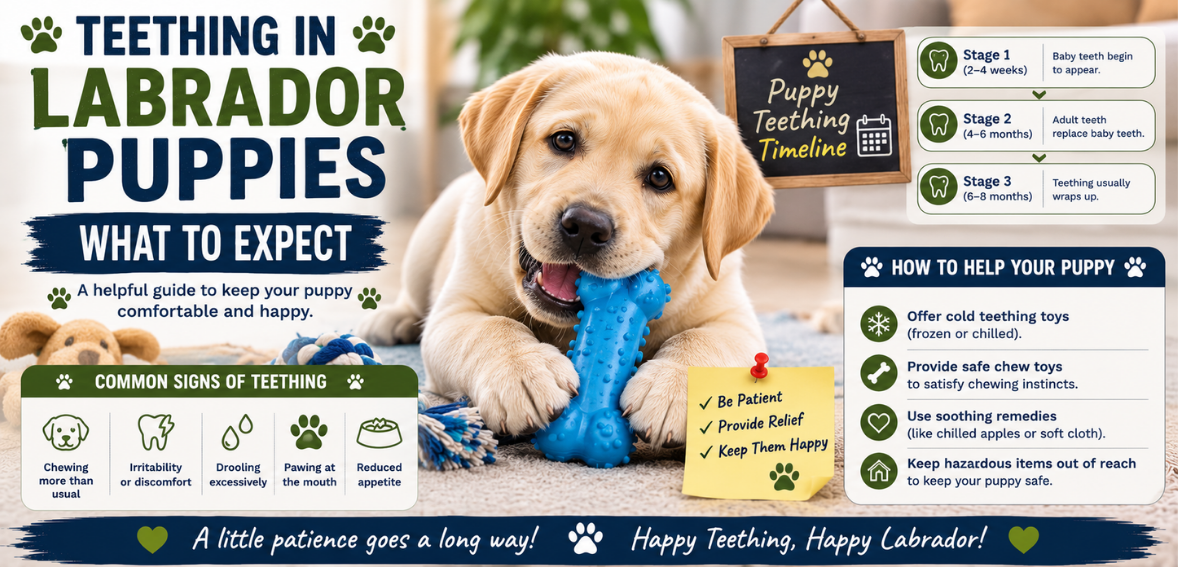
Teething explains a lot of what looks like sudden, inexplicable chewing intensity in an otherwise well-behaved Labrador puppy. Understanding the actual timeline — and which textures survive a Lab’s already-strong jaws even at this young age — makes the whole phase far less frustrating to manage.
Teething Timeline for Labradors
| Age | What’s Happening |
|---|---|
| 0–2 weeks | Born toothless |
| 2–4 weeks | Baby (deciduous) incisors and canines begin erupting |
| 6–8 weeks | Full set of 28 baby teeth typically in place |
| 12–16 weeks | Baby teeth begin falling out; adult teeth start erupting; most noticeable teething behavior begins |
| 3–5 months | Adult incisors erupt |
| 4–6 months | Adult canines and premolars erupt |
| 6–8 months | Full set of 42 adult teeth typically complete |
Large-breed puppies like Labradors sometimes erupt their adult teeth slightly earlier within this range than small-breed puppies, though individual variation is normal. See our Labrador puppy growth stages guide for how teething lines up with other developmental milestones.
Signs Your Lab Puppy Is Teething
- Increased chewing and mouthing intensity, often on objects that weren’t a target before
- Excessive drooling
- Small spots of blood on toys or chews — normal in mild amounts
- Reddened or slightly swollen gums
- Occasional finding of tiny baby teeth on the floor (many are also swallowed harmlessly during eating or chewing)
- Mild irritability or reduced interest in harder foods temporarily
Safe Ways to Soothe Teething Pain (Frozen Toys, Textures to Use and Avoid)
- Frozen wet washcloths, knotted and dampened, then frozen — a genuinely effective, free option for gum relief
- Soft rubber teething toys designed specifically for puppies, with some give rather than rigid hardness
- Frozen KONG-style toys filled with a small amount of soft food, offering both cooling relief and mental engagement
Skip anything genuinely hard at this age — real bones, antlers, hooves, and hard nylon chews carry a real risk of damaging still-developing teeth. A good rule of thumb from veterinary dentistry: if you can’t press a fingernail into a toy’s surface at all, it’s likely too hard for a teething puppy’s mouth.
Best and Worst Teething Chew Toys for a Strong-Jawed Breed
Good Choices
- Soft rubber puppy teething toys
- Frozen wet washcloths
- Soft-fill frozen KONG-style toys
- Puppy-specific soft nylon (not adult “power chew” hardness)
Avoid at This Age
- Real bones or antlers
- Hooves
- Adult-strength hard nylon chews
- Tennis balls used for chewing (fuzz is abrasive to developing teeth with sustained chewing)
Even a Labrador puppy’s still-developing jaw carries real bite force, so “puppy-safe” genuinely matters here — not just a marketing label. See our full guide to the best chew toys for Labrador puppies for specific product recommendations by texture and age.
Managing Increased Biting and Chewing During Teething
Teething often overlaps with — and intensifies — normal mouthy puppy behavior, making it hard to tell whether a bite is about sore gums or simple curiosity. Redirect consistently to an appropriate toy the moment mouthing starts on skin, clothing, or furniture, and keep a teething toy within reach at all times during this phase so redirection is always immediately available. See our full guide to dealing with Labrador puppy biting and nipping for the complete approach.
Retained Baby Teeth and Bite/Alignment Problems to Watch For
Occasionally, a baby tooth doesn’t fall out as its adult replacement erupts — most commonly seen with the canine teeth. A retained baby tooth sitting alongside its adult counterpart can crowd the permanent tooth, trap food and plaque, and increase the risk of early gum inflammation and misalignment.
- A baby tooth still present alongside a visibly erupting adult tooth
- Two teeth occupying the same position in the jaw
- Visible misalignment as adult teeth come in
A retained baby tooth typically needs veterinary extraction to prevent alignment and dental health problems — it won’t reliably fall out on its own once an adult tooth is already erupting beside it.
When to Call the Vet During Teething
- Heavy or persistent bleeding, rather than small occasional spots
- A baby tooth clearly retained alongside an erupted adult tooth
- Visible swelling, pus, or a foul odor from the mouth
- Refusal to eat for more than a day
- Visible misalignment or a bite that looks noticeably off
- No adult teeth visible by around 7–8 months old
Mild gum bleeding and some drooling are a normal part of this process — the signs above are what separate ordinary teething from something worth a dental exam.
Protecting Your Home and Belongings Through the Teething Phase
- Keep appropriate teething toys in every room your puppy has access to, so redirection is always convenient
- Use baby gates or supervised confinement in unproofed rooms during this especially chew-intense window
- Store shoes, cords, and small objects out of reach — teething intensifies a puppy’s existing tendency to chew and swallow inappropriate items
- Revisit your home puppy-proofing setup specifically for this phase, since chewing intensity often increases noticeably compared to earlier weeks
Frequently Asked Questions
When do Labrador puppies start teething?
Baby teeth begin erupting around 2–4 weeks old. The more noticeable teething phase, when baby teeth fall out and adult teeth grow in, typically runs from about 12 weeks to 6–8 months old.
At what age do Lab puppies lose their baby teeth?
Most baby teeth begin falling out around 3–4 months old, with the full set of 42 adult teeth typically complete by 6–8 months.
How can I relieve my teething Labrador puppy?
Offer frozen wet washcloths, soft rubber puppy teething toys, and frozen soft-fill puzzle toys. Avoid hard items like real bones, antlers, or adult-strength chews, which can damage developing teeth.
Is it normal for my puppy to bleed while teething?
Yes, mild, occasional spots of blood on toys or chews are normal during teething. Heavy or persistent bleeding is not normal and warrants a veterinary check.
What are the best teething toys for a Labrador puppy?
Soft rubber puppy-specific teething toys, frozen wet washcloths, and soft-fill frozen puzzle toys are all good choices. Avoid real bones, antlers, and hard adult-strength chews until adult teeth are fully in.
Managing extra mouthiness alongside the teething phase?
See our guide to Labrador puppy biting and nipping →Sources
- American Kennel Club — Timeline of Puppy Teething
- PetMD — Puppy Teething: Timeline, Signs, and Care Tips
- Texas Veterinary Dental Center — Adult Permanent Tooth Eruption in Dogs
- USDA APHIS — Aging Puppies by Teeth (reference chart)