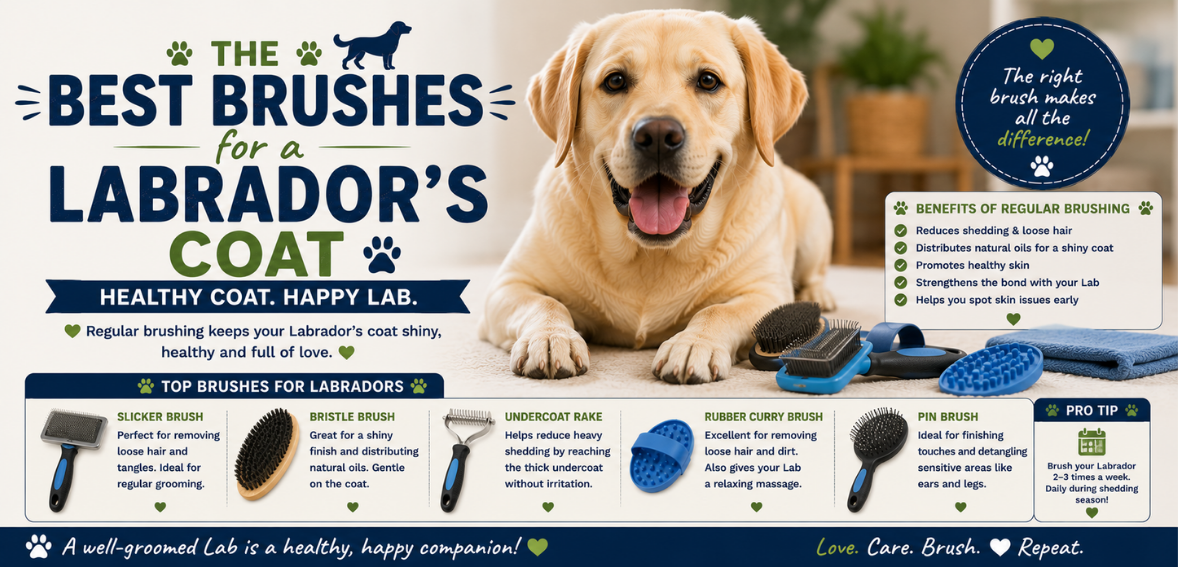
- Best Overall: Safari Undercoat Rake
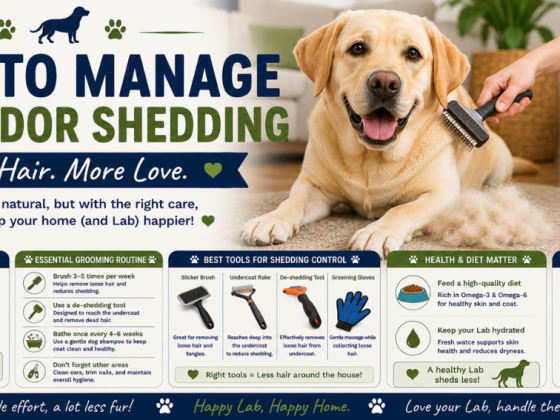
- Best for Heavy Shedding Season: FURminator deShedding Tool for Large Dogs
- Best Slicker/Finishing Brush: Hertzko Self-Cleaning Slicker Brush
- Best Budget/Everyday Brush: KONG ZoomGroom Rubber Curry Brush
What Makes a Good Brush for a Double Coat
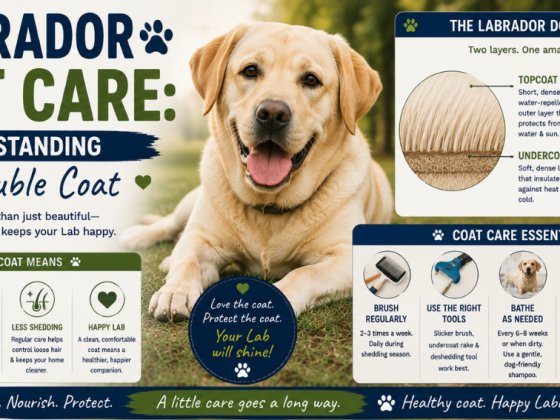
A Labrador’s coat has two layers — a short, coarse outer guard coat and a soft, dense undercoat — and the right brush needs to reach the second layer without damaging the first. Look for tools with rounded (not sharp) tips to avoid scratching skin, an edge or pin spacing designed for dense undercoat rather than fine or curly hair, and a comfortable grip for repeated strokes, since a proper session takes a few minutes of sustained brushing, not a few quick passes.
Undercoat Rakes (Top Pick + Why)
Safari Undercoat Rake
Long, rounded-tip stainless steel pins · Two-row design · Ergonomic handle
Verdict: The single most effective everyday tool for a Labrador’s coat, reaching the dense undercoat other brushes only skim.
The rounded pin tips glide through the topcoat to catch loose undercoat without scratching skin, and the two-row design pulls more dead hair per stroke than a slicker brush. It’s the closest thing to a do-it-all brush for this breed’s coat type.
Pros
- Reaches undercoat other brush types miss
- Rounded pins are gentle on skin with correct pressure
- Effective in both routine maintenance and shedding season
Cons
- Can catch and tug if used too aggressively or on mats
- Less effective than a deshedding tool during the heaviest coat blow
Deshedding Tools Like the FURminator (Pros and Cautions)
FURminator deShedding Tool for Large Dogs
Stainless steel edge designed to reach through topcoat to loose undercoat · FURejector button to release collected hair
Verdict: Genuinely the most effective tool for pulling large volumes of loose undercoat during peak seasonal shedding, but it needs restraint, not daily use.
The edge is specifically shaped to catch loose undercoat while (in theory) passing over healthy topcoat and guard hairs. In practice, this depends heavily on correct technique and light pressure — used too often or too aggressively, it can thin the topcoat or irritate skin over time.
Pros
- Removes the most undercoat volume per session of any tool here
- Especially effective during the twice-yearly seasonal coat blow
Cons
- Overuse can thin the topcoat or irritate skin
- Not intended for daily use, unlike a rake or curry brush
- Premium price point relative to basic brushes
Limit deshedding blade use to once or twice a week, even during heavy shedding, and always use light pressure in the direction of hair growth. Daily use is the most common way owners accidentally damage a healthy double coat with this tool.
Slicker Brushes
Hertzko Self-Cleaning Slicker Brush
Fine, slightly bent stainless steel pins · Retractable, self-cleaning button
Verdict: A good finishing step after a rake or deshedding tool, smoothing the topcoat and catching any remaining loose hair.
Slicker brushes work best as a final pass rather than a primary tool for a Labrador’s coat, since the fine pins are more suited to picking up surface hair than reaching deep undercoat. The self-cleaning retraction feature meaningfully speeds up cleanup between strokes.
Pros
- Self-cleaning mechanism saves time during longer sessions
- Gentle enough for frequent use
Cons
- Not effective alone for a Lab’s dense undercoat
- Best used in combination with a rake or deshedding tool, not as a standalone solution
Rubber Curry / Bristle Brushes for Finishing
KONG ZoomGroom Rubber Curry Brush
Textured natural rubber nubs · Doubles as a bath tool
Verdict: An affordable, gentle daily-use tool that also distributes natural coat oils and works well during bath time.
The rubber nubs loosen surface debris and dead hair while massaging the skin, making it a good daily-use complement to a more targeted undercoat tool rather than a replacement for one. It also holds up well when used wet during baths.
Pros
- Inexpensive and durable
- Doubles as a bath-time tool
- Gentle enough for daily use, including on puppies
Cons
- Doesn’t reach dense undercoat during heavy shedding
- Best paired with a rake or deshedding tool during seasonal blow
Brush Comparison Table
| Brush | Best Coat Stage | Skill Level | Price Tier |
|---|---|---|---|
| Safari Undercoat Rake | Routine maintenance + shedding season | Beginner-friendly | Budget–Mid |
| FURminator deShedding Tool | Heavy seasonal shedding only | Requires correct technique | Premium |
| Hertzko Slicker Brush | Finishing step, any time | Beginner-friendly | Mid-range |
| KONG ZoomGroom | Daily maintenance, bath time | Beginner-friendly | Budget |
How to Use Each Brush Correctly
- Start with the rubber curry brush over the whole body to loosen surface debris and distribute natural oils.
- Follow with the undercoat rake, using short, gentle strokes in the direction of hair growth, letting the tool’s own weight do the work rather than pressing hard.
- Use the deshedding tool sparingly — once or twice a week even during heavy shedding — with light pressure, checking regularly that you’re only removing loose undercoat, not cutting healthy topcoat.
- Finish with the slicker brush to smooth the coat and catch any remaining loose hair.
Our Evaluation Methodology and Verdict
We did not run a formal multi-week test across a panel of dogs for this guide. Instead, each pick was evaluated against a consistent set of criteria: design suited to a double coat specifically (rounded pin tips, appropriate spacing for dense undercoat), manufacturer material and safety specs, verified buyer feedback patterns (particularly reports of skin irritation or coat damage from incorrect use), and professional grooming guidance on correct technique and frequency for each tool type.
If you have first-hand experience with any of these tools on your own Labrador, we’d genuinely welcome hearing about it — real usage feedback from Lab owners is exactly what strengthens a guide like this over time.
Frequently Asked Questions
What is the best brush for a Labrador?
An undercoat rake, such as the Safari Undercoat Rake, is generally the most effective everyday brush for a Labrador, since it reaches the dense undercoat where most shedding originates, without the overuse risks of a deshedding blade.
Do I need a slicker brush or an undercoat rake for my Lab?
An undercoat rake should be your primary tool, since Labs shed mainly from the dense undercoat that slicker brushes aren’t designed to reach. A slicker brush works well as a secondary, finishing step to smooth the topcoat.
Is the FURminator safe for Labradors?
Yes, when used correctly — with light pressure, in the direction of hair growth, limited to once or twice a week even during heavy shedding. Overuse or excessive pressure can thin the topcoat or irritate skin.
Which brush removes the most Labrador undercoat?
Deshedding tools like the FURminator typically remove the largest volume of loose undercoat per session, making them especially effective during the twice-yearly seasonal coat blow, though they should be used sparingly rather than as a daily tool.
What brush should I use during my Lab’s shedding season?
Increase undercoat rake use to near-daily, and add a deshedding tool once or twice a week for the heaviest volume removal, finishing with a slicker brush to smooth the coat.
Sources
- VCA Animal Hospitals — Coat Care and Grooming Tools for Double-Coated Breeds
- American Kennel Club — Labrador Retriever Grooming Guidance
- Manufacturer specifications for products reviewed (Safari, FURminator, Hertzko, KONG)