Nearly every other grooming decision for a Labrador — how often to brush, whether to bathe weekly, whether a “summer haircut” is a good idea — traces back to understanding this one structure. This guide is the foundational explainer: what the double coat actually is, how it works, and why so much conventional grooming advice for single-coated breeds simply doesn’t apply here.
What a Double Coat Is (Guard Hairs vs. Undercoat)
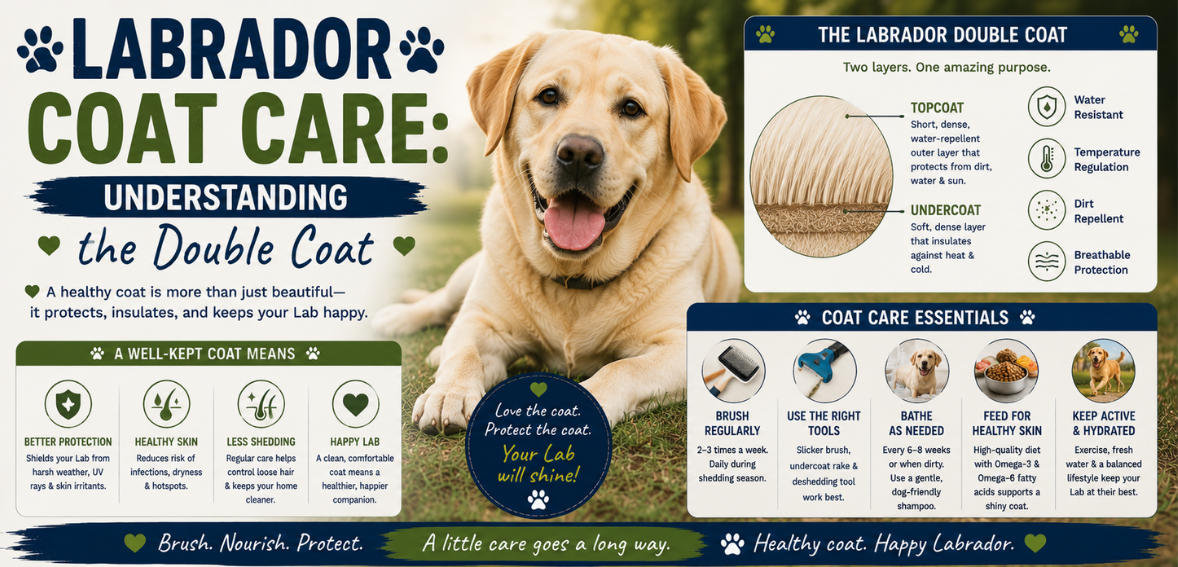
A double coat consists of two distinct hair layers growing from the same follicles: a soft, dense undercoat close to the skin, and longer, coarser guard hairs growing through and over it. The undercoat’s job is insulation; the guard hairs’ job is protection — shedding water, blocking dirt and UV exposure, and giving the coat its visible color and sheen.
Simplified cross-section: fewer, longer guard hairs grow through a dense bed of shorter undercoat hairs, all rooted in the same follicles.
How the Coat Functions (Waterproofing and Temperature Regulation)
The guard coat carries natural oils that cause water to bead and run off rather than soak in — the exact trait that made this breed effective retrieving fish and waterfowl in cold Newfoundland waters. Beneath that, the undercoat traps a layer of warm air against the skin, insulating against cold. In hot weather, that same trapped-air layer works in reverse, helping regulate body temperature by keeping the skin from directly absorbing outside heat — which is part of why removing the coat entirely (shaving) doesn’t actually help a Lab stay cooler.
The Shedding Cycle and Coat Blowing
Labradors shed lightly year-round as the undercoat continuously cycles through growth and rest phases, with two heavier seasonal “coat blows” — typically spring and fall — when a large portion of undercoat releases at once in response to changing daylight and temperature. See our full guides to managing Labrador shedding and seasonal coat blowing in Labradors for what to expect and how to manage it month by month.
Coat Differences Across Colors and Lines
Coat color (black, yellow, or chocolate) doesn’t meaningfully affect coat structure or function — the underlying double-coat biology is identical regardless of pigment. Where real differences do show up is between breeding lines: English (show/bench) Labradors tend to carry a denser, thicker coat suited to the conformation ring’s aesthetic standards, while American (field/working) Labradors often have a somewhat thinner, sleeker coat suited to their leaner working build. Both remain genuine double coats with the same guard hair and undercoat structure.
Why You Should Never Shave a Double Coat
- Impaired temperature regulation: Removing the coat eliminates the insulating air layer that helps regulate both heat and cold, working against the exact system that keeps a Lab comfortable
- Loss of UV and sun protection: The guard coat shields skin from sun exposure; shaved skin is more vulnerable to sunburn
- Uneven, altered regrowth: Shaved double coats sometimes regrow unevenly or with a different, coarser texture, sometimes permanently
- No real cooling benefit: Despite the common assumption that shaving helps in summer, the coat’s structure is part of the cooling system, not an obstacle to it
See our guide to whether Labradors need haircuts and other coat myths debunked for more misconceptions worth clearing up.
Signs of a Healthy vs. Unhealthy Coat
Healthy Coat
- Glossy sheen with visible natural oil distribution
- Even coat thickness across the body
- Sheds consistently but not in bald or patchy areas
- Skin beneath is smooth, without redness or flaking
Unhealthy Coat
- Dull, dry, or brittle texture
- Bald patches or uneven thinning
- Flaky, red, or irritated skin underneath
- Persistent odor despite regular bathing
Unhealthy coat signs are worth a vet visit — they can point to allergies, parasites, hormonal issues, or nutritional gaps rather than a simple grooming fix.
Year-Round Coat Care Basics
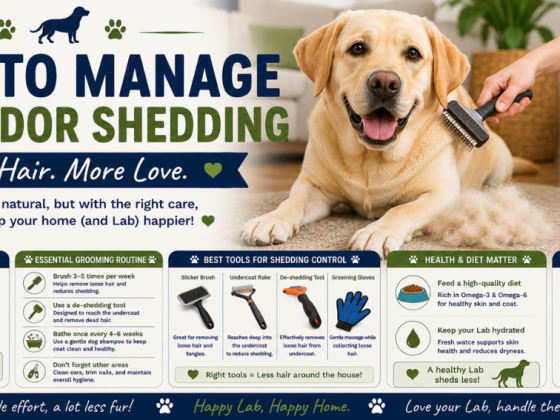
- Brush 3–4 times weekly year-round, increasing to near-daily during seasonal coat blow
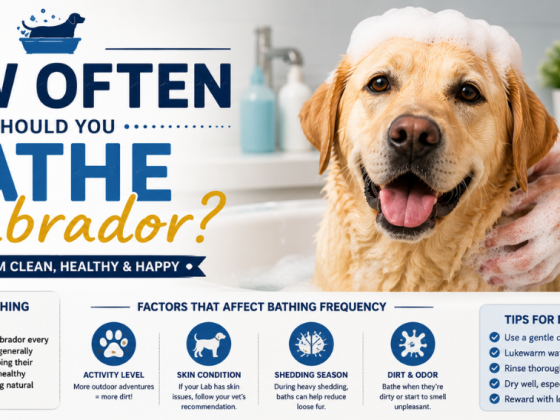
- Bathe roughly every 4–6 weeks, using a dog-specific, pH-balanced shampoo
- Feed a diet with adequate protein and omega-3 fatty acids to support coat and skin health from the inside
- Dry thoroughly after swimming or bathing, particularly around the ears
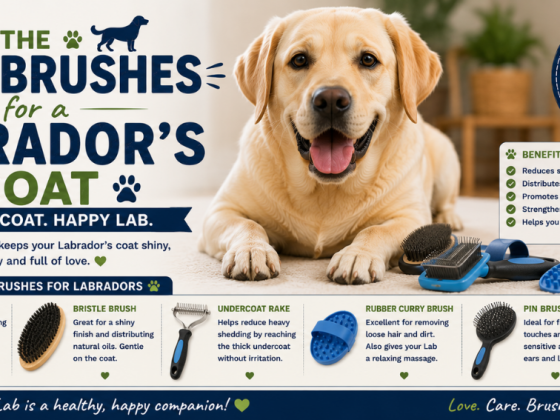
See our full guide to the best brushes for a Labrador’s coat for the specific tools suited to reaching the undercoat effectively.
Common Coat Problems and Fixes
| Problem | Likely Cause | Fix |
|---|---|---|
| Excessive shedding beyond normal blow | Poor nutrition, stress, or an underlying health issue | Vet check; review diet quality |
| Dull, dry coat | Overbathing, poor diet, or dehydration | Reduce bathing frequency; assess diet; ensure water access |
| Matting near the ears or legs | Infrequent brushing allowing undercoat to tangle | Increase brushing frequency, especially in these areas |
| Persistent odor | Ear infection, skin infection, or anal gland issue rather than the coat itself | Vet visit to identify the underlying cause |
Frequently Asked Questions
What is a Labrador’s double coat?
A double coat consists of a dense, insulating undercoat beneath longer, coarser, water-resistant guard hairs, working together to regulate temperature and repel water.
Do Labradors have an undercoat?
Yes. The undercoat is the dense, soft layer close to the skin that provides insulation, distinct from the longer, coarser guard hairs that make up the visible outer coat.
Why shouldn’t you shave a Labrador?
Shaving removes the insulating air layer the double coat uses to regulate both heat and cold, eliminates natural sun protection, and can cause uneven or permanently altered regrowth — without providing the cooling benefit many owners assume it will.
How does a Lab’s coat keep it warm and dry?
The guard hairs carry natural oils that cause water to bead and run off rather than soak in, while the dense undercoat traps warm air close to the skin for insulation.
Is a Labrador’s coat different by color?
No. Coat color (black, yellow, or chocolate) doesn’t affect the underlying double-coat structure or function. Differences in coat density and texture are more related to breeding line (English/show vs. American/field) than to color.
Ready to build the right brushing routine for this coat type?
See our guide to the best brushes for a Labrador’s coat →Sources
- American Kennel Club — Official Standard for the Labrador Retriever (coat description)
- VCA Animal Hospitals — Coat and Skin Care in Dogs
- Veterinary dermatology literature on double-coated breed hair follicle structure