
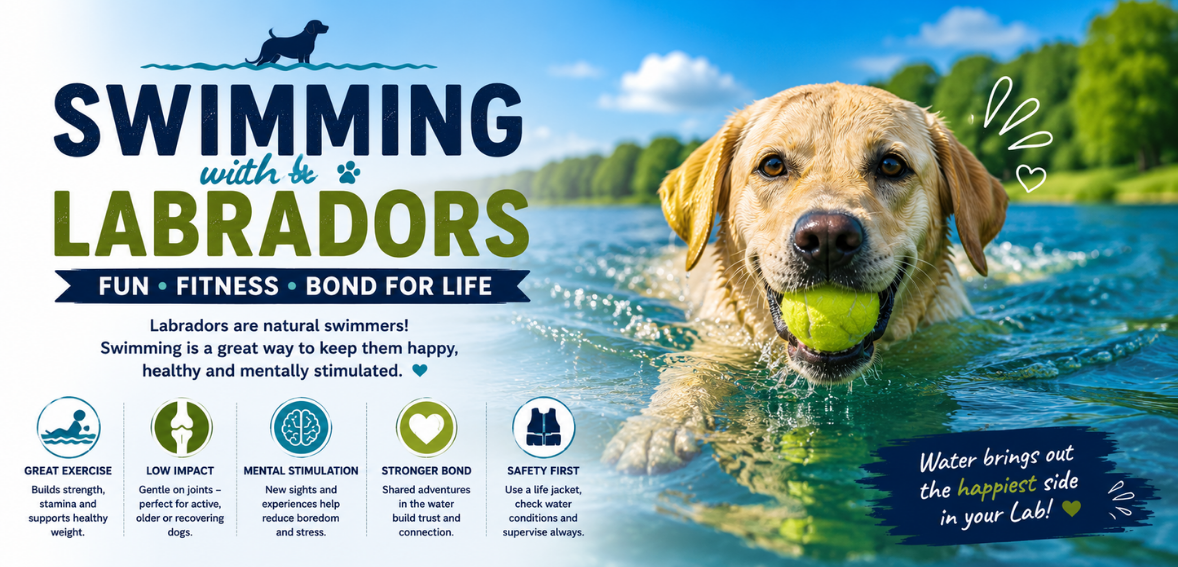
Our first Lab jumped into a lake without hesitation on day one. Our second stood frozen at the water’s edge for a solid ten minutes before finally wading in up to her belly — same breed, same “natural swimmer” reputation, completely different starting point. Both ended up loving the water, but the second one needed patience and a genuinely gradual introduction, which is the part breed enthusiasm often skips over.
Why Labs Are Built to Swim (Otter Tail, Webbed Feet, Water-Repellent Coat)
- Webbed feet: More webbing between the toes than most breeds, providing extra propulsion through water
- Otter tail: A thick, powerful tail that acts as a rudder for steering and balance while swimming
- Water-repellent double coat: A dense undercoat beneath a water-resistant guard coat, developed for hours of work in cold Newfoundland waters
These traits are direct inheritances from the breed’s working history retrieving fish and nets for fishermen — swimming isn’t a party trick for a Labrador, it’s what the breed was originally built to do.
How to Introduce and Teach Swimming Step by Step
- Choose calm, shallow water with a gradual entry — a lake edge or shallow pool step works better than a dock jump for a first introduction.
- Let your dog wade at their own pace, staying in the shallows as long as they want without any pressure to go deeper.
- Get in the water yourself if your dog seems hesitant — many dogs are more willing to follow a person into water than to enter alone.
- Use a favorite toy or treats to encourage forward movement, tossing just a foot or two into the shallows at first.
- Support their belly gently the first time their feet leave the bottom, so they feel secure as the swimming motion kicks in naturally — most dogs start “dog paddling” instinctively within seconds.
- Keep first sessions short and positive, ending before your dog gets tired or anxious, so the experience stays a good one.
- Never force or throw a hesitant dog into water, which can create a lasting fear response rather than confidence.
When Puppies Can Safely Start Swimming
There’s no single fixed age, but a reasonable approach: shallow, supervised exposure in a controlled setting like a kiddie pool at home can start as early as 8–12 weeks, with a properly fitted puppy life jacket and constant supervision. For public lakes, ponds, or rivers, it’s generally safer to wait until your puppy has completed their core vaccination series (typically around 16 weeks) given the parasite and bacteria exposure risk in natural water sources.
Life Jackets and Water-Safety Gear
Even strong-swimming breeds benefit from a life jacket in open water, boating situations, strong currents, or when a dog is tired, injured, or still building confidence. Look for a jacket with a sturdy top handle (useful for lifting your dog out of water or a boat), a snug but not restrictive fit, and bright coloring for visibility. Puppies, seniors, and dogs with any joint or health condition benefit especially, since a life jacket reduces the effort needed to stay afloat.
Pool vs. Lake vs. Ocean vs. River Considerations
| Water Type | Key Consideration |
|---|---|
| Chlorinated pool | Generally safe in normal exposure; can dry skin/coat and irritate eyes if swallowed in quantity — rinse after swimming |
| Lake or pond | Watch for blue-green algae blooms (especially in warm, stagnant water) and Giardia parasites; avoid any water with visible scum, mats, or unusual odor |
| Ocean | Offer fresh water regularly to reduce saltwater drinking, which can cause GI upset; rinse salt from coat and paws after swimming |
| River | Assess current strength before allowing off-leash swimming; even strong swimmers can struggle against fast-moving water |
Health Risks (Water Intoxication, Swimmer’s Ear, Blue-Green Algae, Saltwater Ingestion)
Water intoxication (hyponatremia) happens when a dog swallows more water than their body can process, often from repeatedly biting at sprinklers, fetching in water for extended periods, or excessive play with a hose. Signs include:
- Vomiting
- Loss of coordination or stumbling
- Visible bloating
- Lethargy or unusual dullness
- Dilated pupils
- Difficulty breathing, seizures, or collapse in severe cases
This is a medical emergency — seek veterinary care immediately if you notice any of these signs after extended water play.
Cyanobacteria thrive in stagnant, warm freshwater (75°F and up) and can appear as a blue-green, pea-soup-like scum, mats, or foam on the water’s surface. Some strains produce toxins that cause liver failure or severe neurologic damage, sometimes within 15 minutes to a few hours of exposure — and simply licking contaminated water off the fur can be fatal. There’s no way to visually confirm whether a specific bloom is toxic, so the only safe approach is avoiding any water with visible algae blooms, scum, or unusual odor entirely, and seeking emergency vet care immediately if exposure is suspected.
- Swimmer’s ear (otitis externa): Moisture trapped in the ear canal after swimming creates an environment where bacteria and yeast thrive — dry ears thoroughly after every swim.
- Saltwater ingestion: Swallowing ocean water can cause vomiting and diarrhea; offering fresh water during and after ocean swims helps reduce how much saltwater a dog drinks.
- Giardia and other parasites: Present in some freshwater sources, causing diarrhea and fatigue that can last weeks if untreated.
Post-Swim Care (Rinsing, Drying Ears, Coat)
- Rinse with fresh water after swimming in a pool, lake, or ocean to remove chlorine, salt, algae, or bacteria from the coat
- Dry ears thoroughly with a towel or cotton ball at the outer ear canal every single time — this is the single most effective habit for preventing swimmer’s ear
- Check paws for debris, cuts, or irritation, especially after swimming in natural water
- Full shampooing isn’t needed after every swim — a rinse is usually enough; see our full guide to how often you should bathe a Labrador for the balance between rinsing and full baths
See our full guide to cleaning your Labrador’s ears the right way for a complete ear-care routine.
Swimming as Low-Impact Exercise for Seniors and Arthritic Labs
Swimming is one of the best exercise options for older Labs or dogs managing joint conditions like hip or elbow dysplasia, since water supports body weight and dramatically reduces the impact placed on joints compared to running or jumping. A life jacket is especially helpful here, reducing the energy needed to stay afloat so a dog with limited stamina can still get a meaningful, joint-friendly workout. Always confirm with your vet before starting or increasing swimming for a dog with a diagnosed condition, and keep early sessions short.
See our full guide to how much exercise a Labrador needs daily for how swimming fits into an overall routine, and our guides to hiking with your Labrador and the best dog sports for Labradors for other structured activity ideas.
Frequently Asked Questions
Are Labradors natural swimmers?
Yes. Labradors have webbed feet, an otter-like rudder tail, and a water-repellent double coat — physical adaptations from their working history retrieving in Newfoundland’s cold waters, making them one of the most naturally water-capable breeds.
How do I teach my Labrador to swim safely?
Start in calm, shallow water with a gradual entry, let your dog wade at their own pace, get in the water yourself if they’re hesitant, and support their belly gently the first time their feet leave the bottom. Never force or throw a hesitant dog into water.
Is chlorine pool water safe for my Lab?
Generally yes, in normal exposure, though chlorine can dry the skin and coat and irritate eyes if swallowed in large amounts. Rinse your dog with fresh water after pool swimming as a precaution.
Can Labradors get water intoxication from swimming?
Yes. Water intoxication (hyponatremia) can occur from swallowing excessive water during extended fetch or sprinkler play. Watch for vomiting, loss of coordination, bloating, and lethargy, and seek emergency veterinary care immediately if these appear.
At what age can a Labrador puppy start swimming?
Shallow, supervised swimming in a controlled setting like a kiddie pool can start as early as 8–12 weeks with a properly fitted life jacket. For public lakes or ponds, waiting until the core vaccination series is complete, typically around 16 weeks, is generally safer.
Looking for more ways to keep your water-loving Lab active?
See our guide to the best dog sports for Labradors →Sources
- Cornell University College of Veterinary Medicine — Blue-Green Algae Poisoning (Cyanobacteria Toxicosis)
- ASPCA — Blue-Green Algae Toxicosis: What You Need to Know to Keep Your Pet Safe
- VCA Animal Hospitals — Cyanobacteria (Algae) Poisoning
- Veterinary Poisons Information Service — Water Intoxication in Dogs