My swim-obsessed Lab used to come home from the lake smelling like, well, lake, and my instinct every single time was to bathe her immediately. It took a groomer pointing out that I was drying out her coat faster than the swimming itself for me to switch to a quick freshwater rinse instead of a full shampoo most of the time — and her coat noticeably improved within a couple of months.
The Short Answer
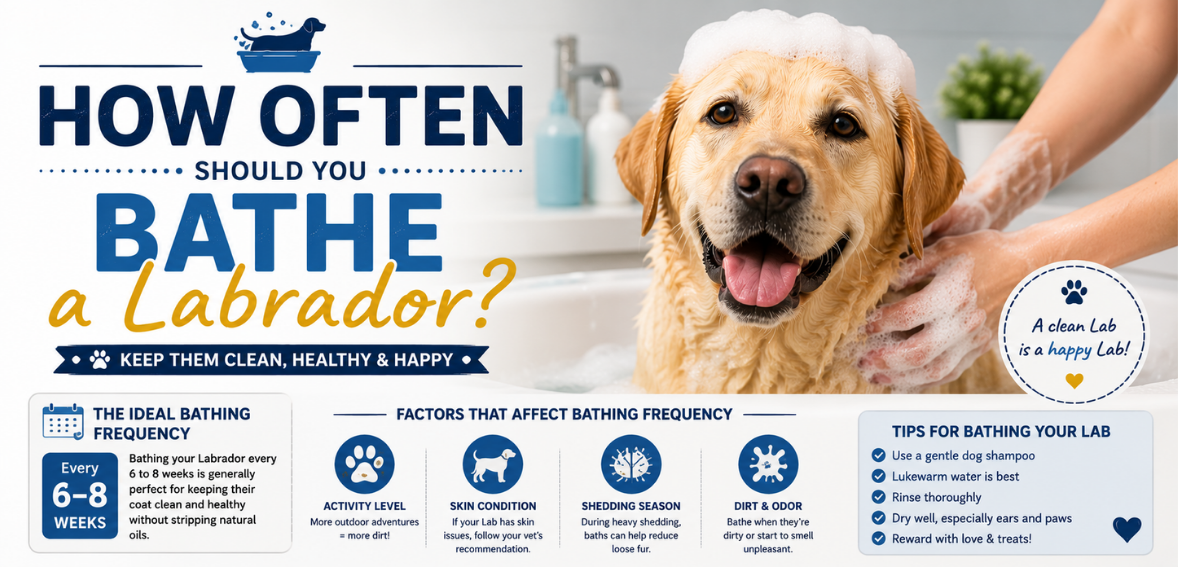
Most veterinary and grooming sources recommend bathing double-coated breeds like Labradors every 4 to 6 weeks under normal circumstances — active swimmers, dogs with skin conditions, or dogs that get into something messy will need adjustments in either direction, covered below.
Why Over-Bathing Damages the Coat and Skin
A Labrador’s coat relies on natural oils to stay water-resistant, and frequent bathing strips those oils faster than the body can replenish them. There’s also a pH mismatch to consider: dog skin sits at a near-neutral pH of roughly 6.2 to 7.4, while human skin (and human shampoo, formulated for it) is more acidic, around 5.5. Using the wrong pH product, or simply bathing too often even with a proper dog shampoo, disrupts the skin’s protective “acid mantle” — leading to dryness, irritation, and a coat more vulnerable to bacterial or yeast overgrowth, not less.
The skin’s microbiome — its resident, beneficial bacteria — plays a real role in keeping opportunistic organisms in check. Repeated stripping from over-bathing can disrupt that balance, which is part of why over-bathed dogs sometimes develop more skin issues, not fewer.
Factors That Change the Schedule (Activity, Swimming, Allergies)
| If Your Lab… | Then… |
|---|---|
| Swims frequently in a pool | Rinse with clean water after each swim; chlorine can dry skin, but a full shampoo isn’t needed every time |
| Swims in lakes or the ocean | Rinse thoroughly with fresh water after every swim to remove algae, salt, or bacteria; shampoo only every few swims or when visibly dirty |
| Has diagnosed skin allergies | Follow your vet’s specific medicated bathing schedule, sometimes as often as every 1–2 weeks — this is different from routine bathing and is treating a condition, not just cleaning |
| Rolled in something foul | Bathe immediately regardless of the regular schedule; occasional exceptions don’t undo the benefit of an otherwise spaced-out routine |
| Is mostly indoors and low-activity | The lower end of the range, or even every 6–8 weeks, is often sufficient |
Bathing Labs Who Swim in Lakes and Oceans
A quick freshwater rinse after every swim is usually enough — this removes salt, sand, algae, and bacteria without stripping the coat’s oils the way a full shampoo session would. Save actual shampooing for every several swims, or whenever your dog starts to smell or feel oily/dirty to the touch, rather than after every single outing. Dry ears thoroughly after every swim regardless of whether you shampoo, since trapped moisture in the ear canal is a bigger infection risk for this breed than a slightly “lake-smelling” coat.
Puppies vs. Adults vs. Seniors
- Puppies: Bathe only when necessary in the first few months, using a gentle puppy-specific shampoo — their skin barrier is still developing and is more easily disrupted.
- Adults: The standard 4–6 week range applies, adjusted for activity and lifestyle as above.
- Seniors: May need slightly less frequent bathing if activity has decreased, though skin changes with age can sometimes call for a gentler, more moisturizing shampoo — ask your vet if you notice increased dryness or flakiness.
Step-by-Step Proper Bathing Method
- Brush before bathing to remove loose undercoat and surface debris — shampoo works better on a coat that’s not already matted with loose hair.
- Use lukewarm water, never hot, and thoroughly wet the coat down to the skin before applying shampoo.
- Apply a dog-specific shampoo, working it in gently rather than vigorously scrubbing, which can irritate skin.
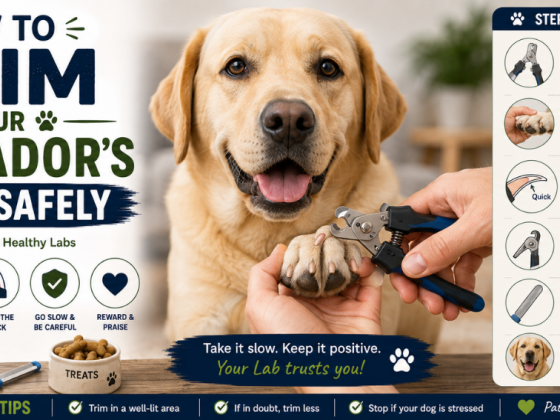
- Rinse thoroughly — residual shampoo left in the coat is one of the most common causes of post-bath itching, so rinse longer than feels necessary.
- Towel dry, then use a cool or low-heat blow dryer if available, especially helpful during shedding season to loosen additional undercoat.
- Dry ears thoroughly with a separate towel or cotton ball at the outer ear, since trapped moisture increases infection risk in this breed’s floppy-eared anatomy.
Choosing the Right Shampoo
Always use a shampoo formulated specifically for dogs — never human shampoo, even “gentle” or baby formulations, which are made for a more acidic skin pH than dogs have. Look for a pH-balanced (roughly 6.0–7.0), fragrance-free or naturally-scented formula, and avoid products with sulfates or synthetic fragrances if your dog has any history of skin sensitivity. See our full guide to the best shampoo for Labradors for specific product recommendations by skin and coat need.
Between-Bath Odor and Coat Maintenance
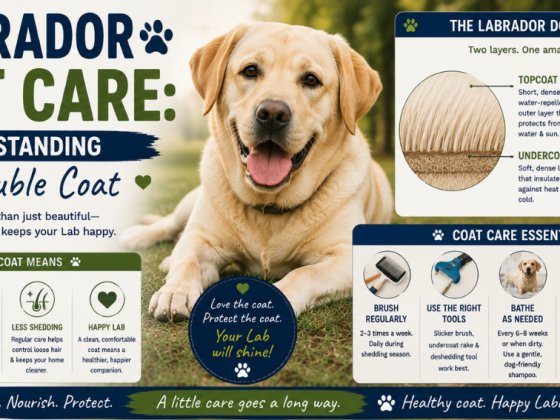
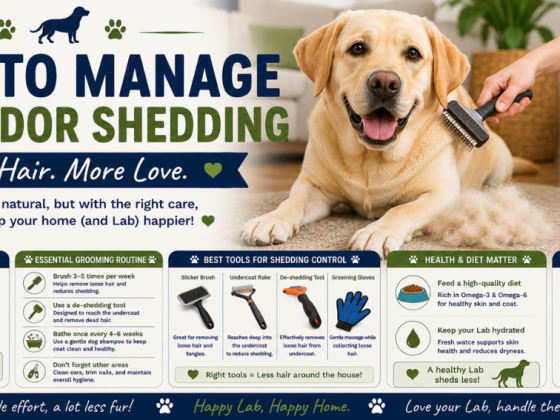
If your Lab smells noticeably “off” well before the next scheduled bath, it’s worth checking for an underlying cause rather than just reaching for shampoo more often — ear infections, skin infections, and anal gland issues are common, treatable causes of persistent odor that bathing alone won’t fix. Between baths, regular brushing helps distribute natural oils through the coat and keeps shedding manageable; see our full guide to managing Labrador shedding and our guide to understanding the Labrador double coat for more on keeping the coat healthy between full baths. Ear care in particular deserves its own routine — see our guide to cleaning your Labrador’s ears the right way.
Frequently Asked Questions
How often should I bathe my Labrador?
Roughly every 4 to 6 weeks for most Labradors, adjusted for activity level, swimming frequency, and any diagnosed skin conditions.
Is it bad to bathe my Lab too often?
Yes. Over-bathing strips the coat’s natural, water-resistant oils and can disrupt the skin’s protective pH balance and microbiome, potentially leading to more dryness, irritation, and skin issues rather than fewer.
Can I bathe my Labrador every week?
Generally not recommended for routine bathing, since weekly bathing is more frequent than most Labradors’ skin and coat can tolerate without drying out. Weekly bathing is sometimes appropriate short-term for a diagnosed skin condition, but only under a vet’s specific guidance.
How do I bathe a Labrador that loves swimming?
Rinse thoroughly with fresh water after every swim to remove chlorine, salt, or algae, and reserve full shampoo sessions for every several swims or whenever your dog is visibly dirty or starting to smell, rather than after every outing.
Why does my Labrador smell even after a bath?
Persistent odor right after bathing often points to an underlying issue like an ear infection, skin infection, or anal gland problem rather than simple dirtiness — worth a vet check if the smell returns quickly or doesn’t resolve with bathing.
Ready to pick the right product for your dog’s coat and skin?
See our full guide to the best shampoo for Labradors →Sources
- VCA Animal Hospitals — Bathing and Coat Care for Dogs
- American Kennel Club — Can You Use Human Shampoo on Dogs?
- Veterinary dermatology literature on canine skin pH and the acid mantle