Labradors don’t just chew — they swallow, and they’ll investigate almost anything edible-looking without hesitation. That food-driven, indiscriminate eating style is exactly why this breed shows up disproportionately often in poisoning and foreign-body cases at emergency vet clinics. This guide covers the foods that pose a genuine risk, ranked by how dangerous they are, plus exactly what to do if your dog eats something on this list.
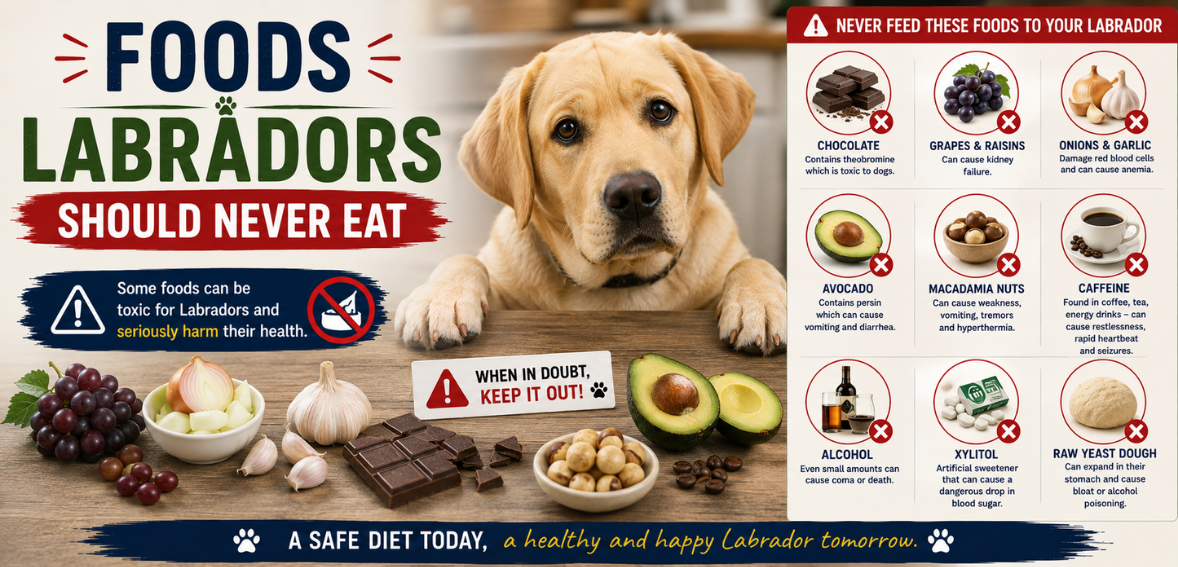
Most Dangerous Foods for Labradors (Chocolate, Xylitol, Grapes/Raisins, Onions/Garlic)
| Food | Why It’s Dangerous | Onset |
|---|---|---|
| Chocolate (dark/baking most dangerous) | Contains theobromine, which dogs metabolize far more slowly than humans; can cause vomiting, tremors, seizures, and abnormal heart rhythm | 6–12 hours |
| Xylitol (sugar-free gum, candy, some peanut butters, baked goods) | Triggers a rapid insulin release, causing dangerous hypoglycemia and potential liver failure | As fast as 30–60 minutes |
| Grapes and raisins | Can cause acute kidney failure even in small amounts; the exact toxic mechanism isn’t fully understood, and there’s no known “safe” threshold | Hours to 24–72 hours for kidney signs |
| Onions, garlic, leeks, chives (allium family) | Damages red blood cells, leading to hemolytic anemia; toxic in raw, cooked, or powdered form; garlic is considerably more potent per gram than onion | Can be delayed 1–5 days |
Grapes and xylitol are often considered the most acutely dangerous of all, precisely because the toxic dose is unpredictable and small amounts have caused severe illness or death in some dogs. Never assume “just one” is automatically safe with either.
Alcohol, Caffeine, and Macadamia Nuts
- Alcohol: Can cause severe intoxication, dangerously low blood sugar, and respiratory depression even in small amounts relative to a dog’s size
- Caffeine: A stimulant in the same chemical family as theobromine, found in coffee, tea, energy drinks, and some medications; causes similar symptoms to chocolate toxicity
- Macadamia nuts: The exact toxic mechanism is unclear, but as few as 2–3 nuts have caused weakness, vomiting, tremors, and fever in dogs, typically appearing within 12 hours and resolving over 12–72 hours; rarely fatal on their own but genuinely distressing
Fatty Foods and Pancreatitis Risk in Labs
A sudden large amount of fatty food — table scraps, bacon grease, fatty meat trimmings — can trigger pancreatitis, a painful and potentially serious inflammation of the pancreas. This risk is especially relevant for Labradors given the breed’s tendency toward opportunistic scavenging and counter-surfing; a holiday dinner’s worth of fatty scraps eaten in one sitting is a classic pancreatitis trigger. Symptoms include vomiting, abdominal pain, lethargy, and reduced appetite, typically requiring veterinary treatment.
Cooked Bones and Choking Hazards
Cooked bones become brittle and are prone to splintering, unlike raw bones, which retain more flexibility. Splintered bone fragments can cause mouth or throat injury, choking, or intestinal obstruction and perforation — a genuine surgical emergency. Never give cooked bones of any kind, and supervise any bone or bone-like chew closely regardless of type.
Foods That Are Only Risky in Large Amounts
| Food | Risk Level | Notes |
|---|---|---|
| Dairy (milk, cheese) | Low | Many dogs lack sufficient lactase, leading to diarrhea or GI upset with larger amounts, not a toxic reaction |
| Plain cooked bread | Low | Generally fine in small amounts; unbaked yeast dough is genuinely dangerous, since it can rise and produce gas and alcohol in the stomach |
| Salt | Low–Moderate | Large quantities can cause sodium ion poisoning; occasional shared food in normal amounts is generally not a concern |
| Cooked plain meat | Low | Generally safe in moderation; avoid seasoning with onion, garlic, or excess fat |
Symptoms of Food Poisoning to Watch For
- Vomiting or diarrhea
- Lethargy or noticeable weakness
- Loss of appetite
- Abdominal pain or a hunched posture
- Tremors or seizures
- Rapid or abnormal heart rate
- Pale or white gums
- Excessive thirst or urination
- Disorientation
Symptoms don’t always appear immediately — some toxins cause internal damage well before visible signs develop, which is exactly why waiting to see if your dog “seems okay” isn’t a safe strategy after a known ingestion.
What to Do in an Emergency (Pet Poison Hotline)
Call immediately — don’t wait for symptoms:
ASPCA Animal Poison Control Center: (888) 426-4435
Available 24/7 (a consultation fee typically applies). You can also contact your regular vet or nearest 24-hour emergency animal hospital.
Have ready: the specific food or substance, the estimated amount eaten, your dog’s weight, and how long ago it happened.
Do not induce vomiting unless specifically instructed to do so by a vet or poison control. Vomiting is not appropriate for every toxin or situation, and inducing it incorrectly can cause additional harm.
Time matters significantly with many of these toxins — for several, treatment is far more effective in the first hour or two than after the substance has been absorbed, which is exactly why an immediate call matters more than waiting to see if symptoms appear.
Safe Human Food Alternatives
- Plain cooked chicken (no seasoning, skin, or bones)
- Plain cooked carrots or green beans
- Small pieces of plain, unsalted, unseasoned pumpkin or sweet potato
- A small amount of plain, unsweetened yogurt (in dogs that tolerate dairy)
- Small pieces of apple (no seeds or core)
See our full guide to the best treats for training your Labrador for structured options, and our buyer’s guide to the best dog food for Labradors for a complete, safe daily diet. If you’re considering a raw or homemade diet, see our balanced look at raw feeding for Labradors, and our guide to helping an overweight Labrador lose weight if treat and table-scrap habits have crept up over time.
Frequently Asked Questions
What foods are toxic to Labradors?
The most dangerous include chocolate (especially dark/baking), xylitol, grapes and raisins, onions and garlic, alcohol, caffeine, and macadamia nuts. Fatty foods and cooked bones also carry serious risks, though through different mechanisms (pancreatitis and splintering, respectively).
Can Labradors eat grapes or chocolate?
No. Grapes and raisins can cause acute kidney failure even in small amounts with no known safe threshold, and chocolate contains theobromine, which dogs metabolize very slowly and which can cause vomiting, tremors, seizures, and heart arrhythmias.
What human foods are dangerous for my Lab?
Chocolate, xylitol, grapes/raisins, onions/garlic, alcohol, caffeine, macadamia nuts, cooked bones, and large amounts of fatty food are the primary concerns. Many of these are common household items, so checking ingredient labels matters.
What should I do if my Labrador ate something toxic?
Call the ASPCA Animal Poison Control Center at (888) 426-4435 or your vet immediately, rather than waiting for symptoms. Have the food name, estimated amount eaten, your dog’s weight, and the time of ingestion ready. Never induce vomiting unless specifically instructed to do so.
What common foods can poison a dog?
Chocolate, grapes/raisins, onions/garlic, xylitol-sweetened products (including some sugar-free peanut butter and gum), alcohol, caffeine, and macadamia nuts are among the most common household foods that cause poisoning in dogs.
Sources
- ASPCA Animal Poison Control Center — People Foods to Avoid Feeding Your Pets
- Cortinovis, C., Caloni, F. “Household Food Items Toxic to Dogs and Cats.” Frontiers in Veterinary Science, 2016.
- Merck Veterinary Manual — Food Hazards and Chocolate Toxicosis in Animals
- VCA Animal Hospitals — Pancreatitis in Dogs