Ear infections are one of the most common reasons Labradors end up at the vet, and they’re also one of the most frequently mismanaged — treated as a standalone problem to clear up, when recurring cases are very often the visible tip of an underlying allergy that never gets diagnosed. This guide covers why the breed is so prone to this, how to tell what’s actually happening, and when at-home care is appropriate versus when it isn’t.
Why Labradors Are Prone to Ear Infections (Anatomy, Swimming, Allergies)
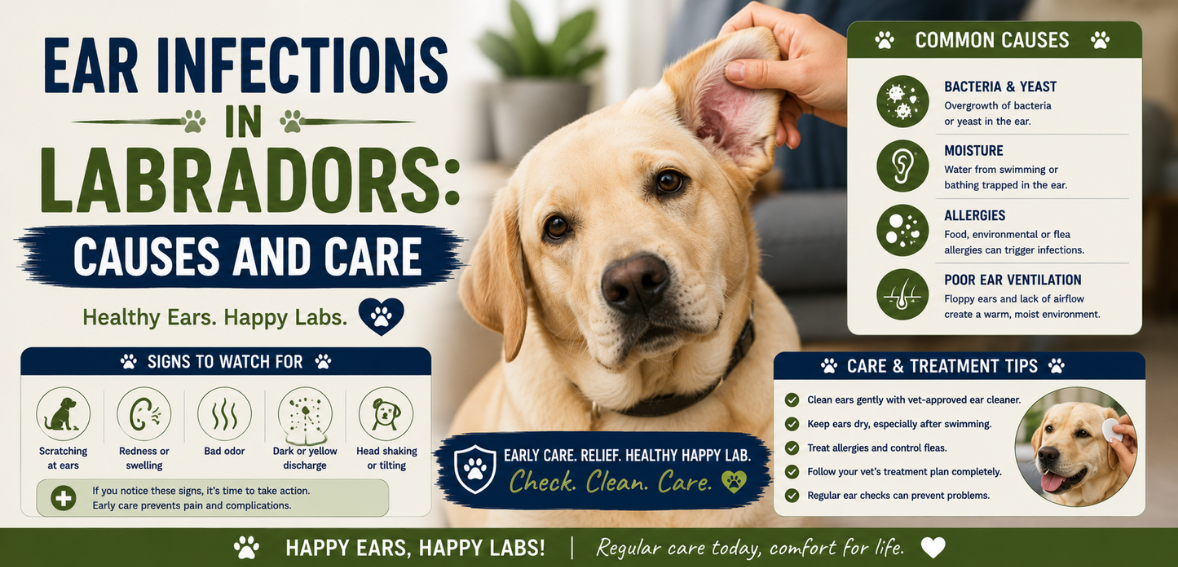
- Floppy (pendulous) ears: Restrict airflow into the ear canal, creating a warmer, more humid environment where yeast and bacteria thrive
- Swimming habits: Trapped water after swimming adds moisture on top of the anatomy issue, compounding the problem for a breed that loves water
- Allergies: Both food hypersensitivity and environmental atopic dermatitis are recognized as the most common underlying (primary) cause of chronic or recurring otitis in dogs — veterinary dermatology sources note that ear infections are sometimes the very first visible sign of an allergy that hasn’t been diagnosed yet
Types and Causes (Bacterial, Yeast/Malassezia, Mites, Allergy-Driven)
| Type | Role | Typical Signs |
|---|---|---|
| Allergy (food or environmental) | Primary cause in most chronic/recurrent cases | Often accompanies skin itching elsewhere on the body |
| Yeast (Malassezia pachydermatis) | Secondary opportunist; overgrows once ear environment changes | Brown, waxy discharge; yeasty odor |
| Bacteria (Staphylococcus, Pseudomonas, others) | Secondary opportunist, sometimes alongside yeast | Yellow-green discharge, stronger odor, more pain |
| Ear mites (Otodectes cynotis) | Parasitic, less common in adult dogs than puppies | Dark, “coffee-ground” textured discharge |
Bacteria and yeast are both considered secondary causes according to the Merck Veterinary Manual — meaning something else (usually allergy-related inflammation, moisture, or a narrowed canal) needs to change the ear’s environment first before these organisms, normally present in small numbers even in healthy ears, are able to overgrow into a genuine infection.
Symptoms (Odor, Discharge, Head Shaking, Redness, Scratching)
- Noticeable odor from the ear
- Discharge — brown/waxy (often yeast), yellow-green (often bacterial), or dark and crumbly (often mites)
- Head shaking or tilting
- Scratching at the ear or rubbing the head against furniture or the floor
- Visible redness or swelling inside the ear flap or canal opening
- Sensitivity or pain when the ear area is touched
When It’s a Vet Visit vs. At-Home Care
- Any of the symptoms above, especially discharge, odor, or visible redness
- Head shaking or scratching lasting more than a day
- Signs of pain when the ear is touched
- Any recurrence after a prior treated infection
At-home care is appropriate only for routine, preventive cleaning of a healthy ear — not for treating a suspected infection. A vet visit is needed to properly diagnose which organism (or combination) is involved via cytology, since bacterial, yeast, and parasitic infections require different medications, and using the wrong product can prolong the problem.
Proper Ear-Cleaning Technique and Safe Products
- Use a vet-approved dog ear cleaning solution, never water alone, alcohol, hydrogen peroxide, or human ear products, which can irritate healthy tissue or worsen an already inflamed ear.
- Fill the ear canal generously with the cleaning solution as directed on the product, without inserting the applicator tip deep into the canal.
- Massage the base of the ear for about 20–30 seconds — you should hear a soft squelching sound as the solution works through debris.
- Let your dog shake their head to bring debris up and out of the canal.
- Wipe away visible debris from the outer ear and canal opening with a cotton ball or soft gauze — never a cotton swab (Q-tip) inserted into the canal itself.
Never insert cotton swabs or any object into the ear canal itself — this risks pushing debris deeper or injuring the eardrum. Never use home remedies (vinegar, essential oils, hydrogen peroxide) without your vet’s specific guidance, since some can be genuinely painful or damaging on inflamed or infected tissue.
Veterinary Treatment (Cytology, Medicated Drops, Treating Underlying Allergies)
- Cytology: Your vet takes a swab of ear discharge and examines it under a microscope to identify whether bacteria, yeast, or mites (or a combination) are present — this determines exactly which medication is appropriate
- Medicated ear drops: Prescribed based on cytology results, often combining an antimicrobial, antifungal, and anti-inflammatory component
- Ear cleaning and drying, sometimes performed in-clinic first, since debris and wax can reduce a topical medication’s effectiveness
- Investigating the underlying cause: For recurrent cases, your vet may recommend a food trial (elimination diet) or allergy testing to identify and manage the primary allergy driving repeat infections, rather than treating each episode in isolation indefinitely
See our full guide to Labrador allergies and skin care for more on identifying and managing the allergic component behind recurrent ear issues.
Prevention (Drying After Swimming, Routine Checks)
- Dry ears thoroughly after every swim or bath, using a towel or cotton ball at the outer ear — this is the single most effective habit for a swimming-prone breed
- Check ears weekly for early odor, redness, or discharge, catching problems before they escalate
- Consider a vet-approved drying ear solution after swimming for dogs who swim very frequently, on your vet’s recommendation
- Address known allergies proactively with your vet’s guidance, since managing the underlying allergy reduces how often ear flare-ups happen in the first place
See our full guide to swimming with Labradors for the complete post-swim care routine, and our Labrador grooming and coat care guide for how ear care fits into a broader routine.
Recognizing Chronic or Recurrent Infections
An infection that clears up with treatment but returns within weeks to months of finishing medication is the clearest sign of an unaddressed underlying cause — almost always an allergy. Rather than repeating the same topical treatment indefinitely each time symptoms return, ask your vet specifically about investigating food or environmental allergies, since resolving the root cause is what actually breaks the cycle. See our full guide to common Labrador health problems for how ear infections fit into the broader picture of breed-specific health.
Frequently Asked Questions
Why does my Labrador keep getting ear infections?
Recurrent infections are usually driven by an underlying allergy, with floppy ears and swimming habits acting as compounding factors. The yeast or bacteria found during treatment are typically secondary opportunists, not the root cause, which is why infections keep returning if the allergy isn’t identified and managed.
How do I know if my dog has an ear infection?
Watch for odor, discharge (brown, yellow-green, or dark and crumbly), head shaking or tilting, scratching at the ear, and visible redness or swelling. A vet exam with cytology is needed to confirm the specific cause.
How do you treat a dog ear infection at home?
You shouldn’t attempt to treat a suspected infection at home — proper diagnosis via cytology is needed to identify whether bacteria, yeast, or mites are involved, since each requires different medication. At-home care should be limited to routine preventive cleaning of a healthy ear.
How often should I clean my Labrador’s ears?
Weekly checks are reasonable for most Labradors, with cleaning as needed based on what you find, and always after swimming. Over-cleaning a healthy ear isn’t necessary and can sometimes cause irritation.
Can swimming cause ear infections in Labs?
Swimming itself doesn’t directly cause infections, but trapped moisture after swimming creates an environment where yeast and bacteria can more easily overgrow, especially combined with this breed’s floppy ear anatomy. Thorough drying after every swim significantly reduces this risk.
Suspect an underlying allergy is behind repeat infections?
See our guide to Labrador allergies and skin care →Sources
- Merck Veterinary Manual — Otitis Externa in Animals; Ear Infections and Otitis Externa in Dogs
- VCA Animal Hospitals — Ear Infections in Dogs
- Veterinary Partner (VIN) — Malassezia Otitis in Dogs and Cats
- Today’s Veterinary Practice — Treating Otitis Externa in Dogs