
Labradors have a reputation as a sturdy, healthy breed, and for the most part that’s earned — but “generally healthy” doesn’t mean “risk-free.” The breed’s own popularity works against it in one specific way: high demand has historically meant more casual breeding, which has let some preventable genetic conditions persist longer than they otherwise might have.
This guide walks through the conditions Labradors are most likely to face, what the research actually shows about prevalence and lifespan, and — most importantly — what’s within an owner’s control to prevent or catch early. Where a condition deserves a full deep-dive, we’ve linked to our dedicated guides.
- Overview of Labrador Breed Health and Lifespan
- Orthopedic Conditions (Hip and Elbow Dysplasia)
- Obesity and Weight-Related Disease
- Ear Infections and Skin Allergies
- Genetic Conditions (EIC, PRA, CNM)
- Cancer Risk in Labradors
- Preventive Care Checklist and Screening Tests
- When to See a Veterinarian
- Condition Comparison Table
- Frequently Asked Questions
Overview of Labrador Breed Health and Lifespan
The average Labrador lives 11 to 13 years. A large 2018 VetCompass study of primary veterinary care records for 33,320 UK Labradors found a median lifespan of 12 years overall, and identified musculoskeletal disorders and cancer as the two leading causes of death, with overweight/obesity, ear conditions, and joint conditions as the most commonly recorded health problems in the breed generally.
That same study found a notable difference by coat color: chocolate Labradors had a shorter median lifespan than black or yellow dogs, a pattern researchers link to the same genetics behind the chocolate coat also being associated with higher rates of ear and skin infections in some breeding lines, rather than color itself causing disease.
Orthopedic Conditions (Hip and Elbow Dysplasia)
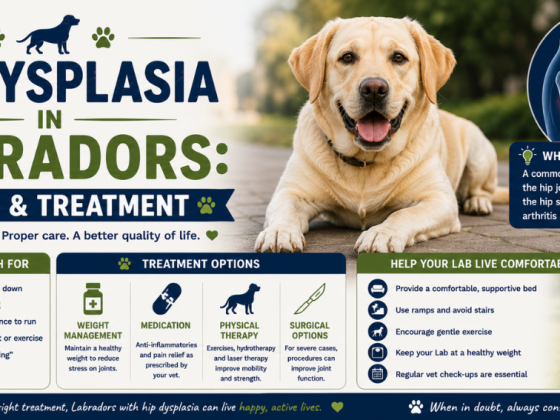
Hip and elbow dysplasia are malformations of the joint that develop during growth, causing the bones to fit together imperfectly. Over time this leads to grinding, pain, and progressive arthritis. OFA data suggests roughly 12% of Labradors show some degree of hip dysplasia, making it one of the more frequently affected large breeds.
- Symptoms: Reluctance to rise, stiffness after rest, difficulty with stairs or jumping, a “bunny hop” gait, and reduced exercise tolerance.
- Onset: Elbow dysplasia can appear as early as 5 months old; hip dysplasia symptoms often become noticeable between 1–2 years, though mild cases may not show until later in life.
- Action: If you notice any of these signs, see your vet for an orthopedic exam and imaging rather than assuming it’s normal stiffness — early management (weight control, joint supplements, physical therapy, or surgery in severe cases) meaningfully improves quality of life.
See our full guide to hip dysplasia in Labradors for detailed management options.
Obesity and Weight-Related Disease
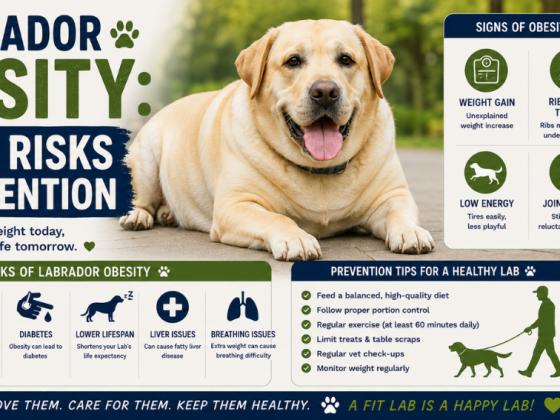
Obesity is arguably the single most preventable major health risk in the breed, and Labradors are genuinely predisposed to it — research has identified a higher rate of a POMC gene mutation in Labradors that’s linked to increased appetite and slower satiety signaling. Estimates suggest roughly 1 in 10 Labradors is affected by obesity at some point.
The consequences go well beyond appearance: excess weight accelerates arthritis and joint disease, strains the heart, increases surgical risk, and shortens lifespan. One of the most cited studies in veterinary medicine, the Kealy et al. lifetime feeding study, found that Labradors kept in lean body condition throughout life lived a median of 1.8 years longer (13.0 years) than littermates fed to maintain a heavier body condition (11.2 years).
- Symptoms: Difficulty feeling ribs without firm pressure, no visible waist from above, reluctance to exercise, and excessive panting after mild activity.
- Action: Ask your vet for a body condition score at every visit, measure food rather than eyeballing it, and limit treats to a small percentage of daily calories.
See our full Labrador obesity guide for practical feeding and weight-management strategies.
Ear Infections and Skin Allergies
A Labrador’s floppy ears trap warmth and moisture, especially in a breed that loves to swim, creating an environment where yeast and bacteria thrive. Ear infections (otitis externa) are one of the most commonly diagnosed problems in the breed.
- Symptoms: Head shaking, scratching at the ears, a noticeable odor, redness, or dark discharge in the ear canal.
- Action: Dry ears thoroughly after swimming or bathing, check weekly for odor or redness, and see your vet promptly for suspected infections — untreated ear infections can become chronic and painful.
Skin allergies (atopic dermatitis) are also common, often showing up as chronic paw-licking, face-rubbing, or recurrent skin infections, and may be linked to environmental or food allergens requiring veterinary diagnosis to manage effectively.
Genetic Conditions (EIC, PRA, CNM)
Several inherited conditions are specific enough to the breed that the Labrador Retriever Club (the AKC parent club) recommends DNA screening for breeding dogs:
- Exercise-Induced Collapse (EIC): A genetic mutation causing weakness or collapse after 5–20 minutes of intense exercise, particularly in excited, high-drive dogs. A DNA test identifies carriers and affected dogs before breeding.
- Progressive Retinal Atrophy (PRA-prcd): A gradual, inherited degeneration of the retina leading to progressive vision loss and eventual blindness, with no treatment available; DNA testing prevents affected litters.
- Centronuclear Myopathy (CNM): A recessive genetic disease causing progressive muscle weakness and abnormal gait, usually apparent by 2–5 months of age in affected puppies, with no cure.
None of these are preventable once a dog is diagnosed — the prevention happens entirely at the breeding stage, which is exactly why asking a breeder for DNA clearances on these three conditions matters as much as hip and elbow scores.
Cancer Risk in Labradors
Cancer is one of the leading causes of death in Labradors, typically diagnosed after age 8. The types most closely associated with the breed include:
- Lymphoma — cancer of the lymphatic system, often first noticed as swollen lymph nodes
- Hemangiosarcoma — a fast-moving cancer of blood vessel tissue, often originating in the spleen and difficult to detect until advanced
- Mast cell tumors — skin tumors that can range from benign-appearing to aggressive
- Osteosarcoma — an aggressive bone cancer, more common in larger breeds
Any new or growing lump, sudden weakness or collapse, pale gums, unexplained weight loss, abdominal swelling, or persistent lethargy. Early detection meaningfully changes treatment options and outcomes for most canine cancers.
Preventive Care Checklist and Screening Tests
- Annual wellness exams (twice yearly from age 7+), including a full physical, weight check, and body condition score
- OFA hip and elbow evaluations before breeding, and imaging if your adult dog shows any joint symptoms
- DNA testing for EIC, PRA-prcd, and CNM if you’re evaluating a breeder or planning to breed
- Annual bloodwork from middle age onward to catch organ or metabolic changes early
- Routine ear checks, especially after swimming, and prompt treatment of any infection
- Consistent weight monitoring and a body condition score at every vet visit
- Dental care, including regular brushing and professional cleanings, to reduce systemic disease risk
- Up-to-date vaccination and parasite prevention appropriate to your region and lifestyle
See our Labrador vaccination and parasite schedule for a full year-by-year timeline, and our guide to caring for a senior Labrador for how these priorities shift after age 7.
When to See a Veterinarian
- Limping, stiffness, or reluctance to rise that lasts more than a day or two
- Any new lump, swelling, or sore that doesn’t resolve within a few days
- Head shaking, ear odor, or visible ear redness
- Noticeable weight gain or loss without a clear cause
- Vomiting, diarrhea, or lethargy lasting more than 24 hours
- Sudden collapse or weakness, even if brief and followed by an apparent full recovery
- Pale or white gums, labored breathing, or abdominal swelling — seek emergency care immediately
Condition Comparison Table
| Condition | Typical Onset | Key Warning Signs | Prevention/Screening |
|---|---|---|---|
| Hip/Elbow Dysplasia | 5 months–2 years | Stiffness, limping, reduced activity | OFA hip/elbow evaluation of breeding stock |
| Obesity | Any age | No visible waist, low exercise tolerance | Portion control, regular exercise, body condition scoring |
| Ear Infections | Any age | Head shaking, odor, redness | Drying ears after swimming, routine checks |
| EIC | Young–adult, during exercise | Collapse after intense activity | DNA test before breeding |
| PRA-prcd | Middle age | Night blindness, progressive vision loss | DNA test before breeding |
| CNM | 2–5 months | Muscle weakness, abnormal gait | DNA test before breeding |
| Cancer (various) | Typically 8+ years | New lumps, weakness, weight loss, pale gums | Regular exams, prompt lump checks |
Frequently Asked Questions
What health problems are Labradors most prone to?
Hip and elbow dysplasia, obesity, ear infections, and certain cancers including lymphoma and hemangiosarcoma are the most common issues, alongside the breed-specific genetic conditions EIC, PRA-prcd, and CNM.
How can I prevent common Labrador health issues?
Keep your Lab in lean body condition, choose a breeder who health-tests for hip, elbow, eye, and genetic conditions, dry ears after swimming, and attend regular veterinary wellness exams to catch issues early.
Are Labrador Retrievers generally healthy dogs?
Yes, Labradors are generally a healthy, robust breed with a typical lifespan of 11–13 years, but they carry above-average predisposition to a specific set of orthopedic, weight-related, and genetic conditions that responsible ownership and breeding can meaningfully reduce.
What genetic tests should a Labrador breeder do?
At minimum, OFA hip and elbow evaluations, an annual eye exam, and a DNA test for exercise-induced collapse (EIC), following the Labrador Retriever Club’s CHIC requirements, with PRA-prcd and CNM DNA tests strongly recommended.
What is the average lifespan of a Labrador and what shortens it?
The average Labrador lifespan is 11–13 years. Obesity, untreated orthopedic disease, and cancer are the factors most likely to shorten it, while maintaining a lean body condition throughout life has been shown in research to add roughly 1.8 years of median lifespan.
Sources
- O’Neill, D.G., et al. “Labrador retrievers under primary veterinary care in the UK: demography, mortality and disorders.” Canine Genetics and Epidemiology, 2018.
- Kealy, R.D., et al. “Effects of diet restriction on life span and age-related changes in dogs.” Journal of the American Veterinary Medical Association, 2002.
- Orthopedic Foundation for Animals (OFA) — Hip Dysplasia Statistics by Breed
- VCA Animal Hospitals — Hip Dysplasia, Ear Infections, and Cancer in Dogs
- The Labrador Retriever Club, Inc. — CHIC Health Testing Requirements
- Raffan, E., et al. “A Deletion in the Canine POMC Gene Is Associated with Weight and Appetite in Obesity-Prone Labrador Retriever Dogs.” Cell Metabolism, 2016.