Let’s set expectations honestly: no brush, shampoo, or supplement will make a Labrador stop shedding. This is a working breed with a coat engineered for cold water and harsh weather, and the undercoat renewing itself is a healthy, normal biological process, not a problem to solve. What you can control is how much of that hair ends up airborne in your living room versus contained in a brush or a bath drain.
Why Labradors Shed (Double Coat Biology)
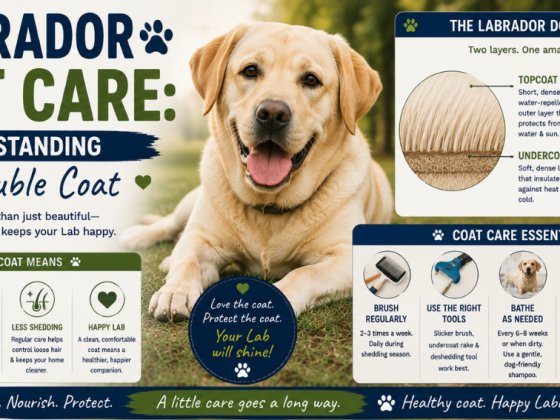
Labradors have a double coat: a short, coarse, water-resistant outer layer (the guard coat) over a soft, dense undercoat that provides insulation. That undercoat is constantly cycling through growth and shedding phases, and because it’s so dense, even everyday shedding is more noticeable than in single-coated breeds. Short hairs also tend to embed more deeply into fabric and upholstery than longer hair, which is part of why Lab hair feels so relentless despite the breed’s short coat.
Year-Round vs. Seasonal Shedding
Labradors shed lightly every single day — there’s no shedding “off season.” On top of that baseline, most Labs go through two heavier shedding periods a year, commonly called “blowing coat,” typically in spring and fall as the undercoat adjusts to the changing season. During peak blowout, a double-coated breed can release a genuinely large portion of its undercoat over a few weeks, which is why owners often feel like the shedding suddenly got dramatically worse even though nothing changed except the calendar.
See our full guide to seasonal coat blowing in Labradors for what to expect month by month.
Brushing Routine and Frequency
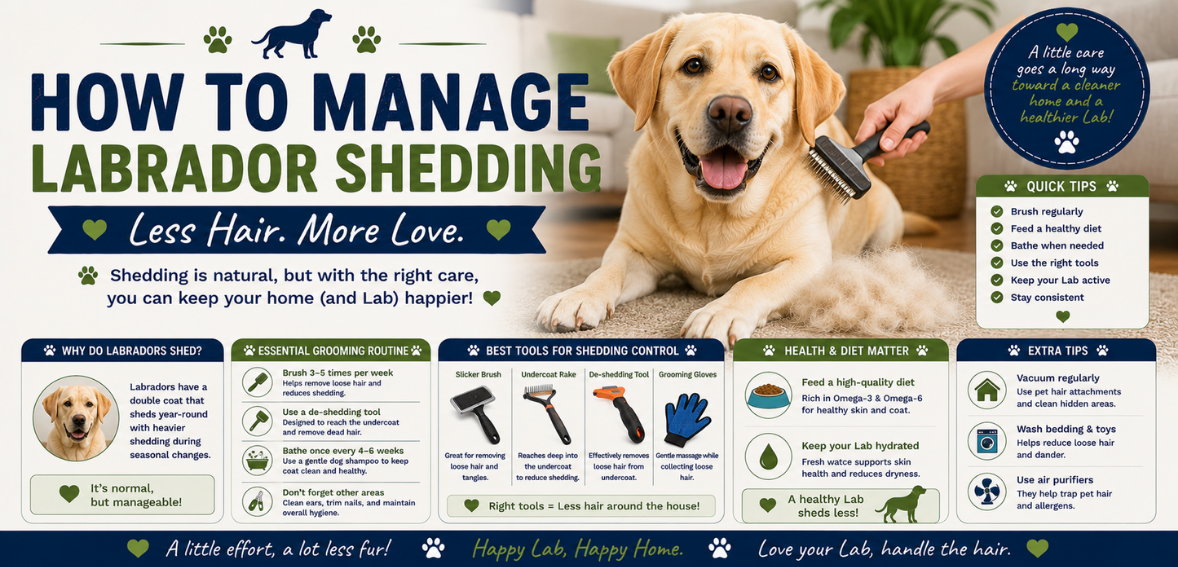
Brushing is, by a wide margin, the single most effective thing you can do — it removes dead hair before it ends up on your floor, couch, or clothes instead of after.
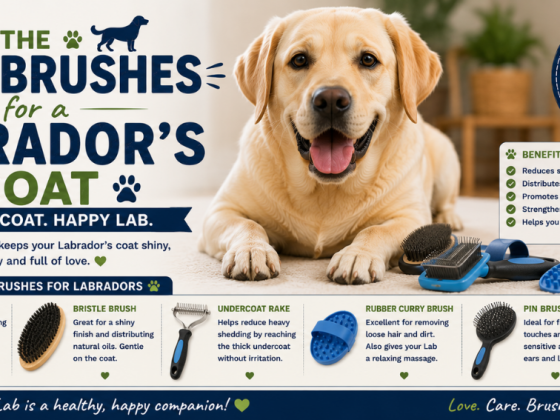
- Start with a rubber curry brush or bristle brush over the whole body to loosen surface debris and distribute natural coat oils.
- Follow with an undercoat rake, working in short, gentle strokes in the direction of hair growth to reach the dense underlayer where most shedding actually originates.
- Use a deshedding tool sparingly — once or twice a week even during heavy shedding — since overuse can irritate skin or thin the protective topcoat.
- Finish with a slicker brush to pick up any remaining loose hair and smooth the coat.
- Maintain 3–4 sessions a week during normal months, increasing to daily during a seasonal coat blow.
Each session only needs to take 10–15 minutes once it’s part of the routine — most owners find it becomes as normal as feeding time. See our guide to the best brushes for a Labrador’s coat for specific tool recommendations by coat condition.
Best Deshedding Tools (Rake vs. Undercoat Brush)
| Tool | Best For | Frequency | Watch Out For |
|---|---|---|---|
| Rubber curry brush | Daily maintenance, bath time | Daily to several times weekly | Minimal risk; gentle on skin |
| Undercoat rake | Reaching dense undercoat, seasonal blow | 2–3x weekly, more during blow | Can irritate skin if pressed too hard |
| Slicker brush | Finishing, removing loose topcoat hair | 2–3x weekly | Aggressive back-and-forth can cause coat breakage |
| Deshedding tool (blade-edge, e.g. Furminator-style) | Heavy seasonal shedding | 1–2x weekly | Can cut coat or thin undercoat if overused or pressed hard |
| High-velocity dryer | Blasting loose undercoat after a bath | As needed during coat blow | Use cool or low-heat setting only |
Never shave a Labrador to “reduce shedding.” Shaving damages the coat’s structure, interferes with its ability to regulate body temperature, and the undercoat often grows back coarser — sometimes permanently altering the coat’s texture.
Bathing to Loosen Dead Coat
Bathing every 4–8 weeks, or after your Lab gets into something messy, helps loosen and remove dead undercoat that brushing alone can miss — especially when followed by a blow-dry on a cool or low-heat setting, which can dislodge a surprising amount of loose fur. Use a dog-specific shampoo; human shampoo can strip the natural oils that keep the topcoat water-resistant, which can actually make shedding worse. Overbathing has the same effect, so resist the urge to bathe more frequently than needed just because shedding season feels overwhelming.
See our full guide on how often you should bathe a Labrador for a complete schedule.
Diet and Supplements for Coat Health
Nutrition genuinely affects shedding volume and coat quality, on top of the breed’s genetic baseline. A high-quality diet with adequate protein and omega-3 fatty acids (EPA and DHA) supports skin and coat health and can noticeably reduce excess shedding tied to a dull or dry coat, though it won’t eliminate the normal, healthy shedding cycle itself. Dry skin and dehydration can also increase shedding, so consistent access to fresh water matters more than owners often realize.
Talk to your vet before adding a supplement, since dosing matters and existing diets may already include adequate omega-3 levels.
Managing Hair Around the Home
- Vacuum with a pet-specific attachment at least twice a week during normal months, daily during a coat blow
- Use washable throws on furniture your Lab favors, rather than fighting embedded hair in upholstery directly
- Keep a lint roller or rubber squeegee by the door for quick clothing touch-ups
- Brush outdoors when possible during heavy shedding season to keep the bulk of loose hair out of the house entirely
- Wash pet bedding weekly since it accumulates hair fast and can reintroduce it to freshly cleaned floors
When Excessive Shedding Signals a Health Problem
Normal Labrador shedding is constant, sometimes heavy, but even — the coat still looks reasonably full and healthy in between blowouts. Certain patterns are worth a vet visit rather than more brushing.
- Patchy or bald spots rather than overall thinning
- Red, irritated, or flaky skin alongside the shedding
- Excessive scratching, licking, or chewing at the coat
- A dull, brittle coat that doesn’t improve with grooming or diet changes
- Sudden, dramatic increase in shedding outside a normal seasonal blow
These patterns can point to parasites, allergies, or an underlying condition like a thyroid imbalance, rather than a normal coat cycle — and they’re worth ruling out rather than assuming it’s “just shedding.”
Frequently Asked Questions
Why does my Labrador shed so much?
Labradors have a dense double coat that sheds constantly year-round, with two heavier seasonal blowouts as the undercoat renews itself for changing weather. It’s a normal, healthy process rather than a sign of poor coat health.
How do I stop my Lab from shedding all over the house?
You can’t fully stop shedding, but consistent brushing 3–4 times a week (daily during coat blow), regular bathing every 4–8 weeks, a quality diet with adequate omega-3s, and frequent vacuuming will dramatically reduce loose hair around the home.
What is the best way to reduce Labrador shedding?
A consistent brushing routine is the single most effective strategy — using a rubber curry or bristle brush regularly, an undercoat rake several times a week, and a deshedding tool sparingly during heavy shedding periods.
Do Labradors shed year-round or seasonally?
Both. Labradors shed lightly every day year-round, with two heavier seasonal “coat blow” periods, typically in spring and fall, when the undercoat releases in much larger volumes.
Can diet reduce how much my Labrador sheds?
Yes, to an extent. A high-quality diet with adequate protein and omega-3 fatty acids supports coat health and can reduce excess shedding linked to a dry or dull coat, though it won’t eliminate the breed’s normal shedding cycle.
Sources
- VCA Animal Hospitals — Coat Care and Shedding in Dogs
- American Kennel Club — Labrador Retriever Grooming Guidance
- Veterinary dermatology guidance on double-coated breed shedding and omega-3 fatty acid supplementation