Yes, and for Labradors specifically it matters more than for small breeds. Large-breed puppy formulas carry the AAFCO “growth (large size)” statement, which caps calcium and phosphorus within a tighter range than regular puppy food. Excess calcium during a large breed’s rapid growth period is linked to developmental orthopedic problems — directly relevant given Labradors’ already-elevated genetic risk for hip and elbow dysplasia. Regular puppy food isn’t dangerous in isolation, but it isn’t formulated with this specific safeguard.
A Labrador puppy will go from around 10 pounds to 60-plus pounds in under a year, and that growth rate is exactly why the food choice matters more here than for most breeds. Get the calcium and calorie balance wrong during this window and you’re not just risking a chubby puppy — you’re influencing how their joints form for the rest of their life.
- Why Labrador Puppies Need Large-Breed Formula
- How We Selected These Puppy Foods
- Top Picks at a Glance
- Best Overall Puppy Food for Labs
- Best Budget and Best Grain-Inclusive Options
- Key Nutrients: DHA, Protein, Calcium Ratios
- Feeding Schedule and Amounts by Age
- When and How to Transition to Adult Food
- Frequently Asked Questions
Why Labrador Puppies Need Large-Breed Formula (Controlled Calcium/Phosphorus)
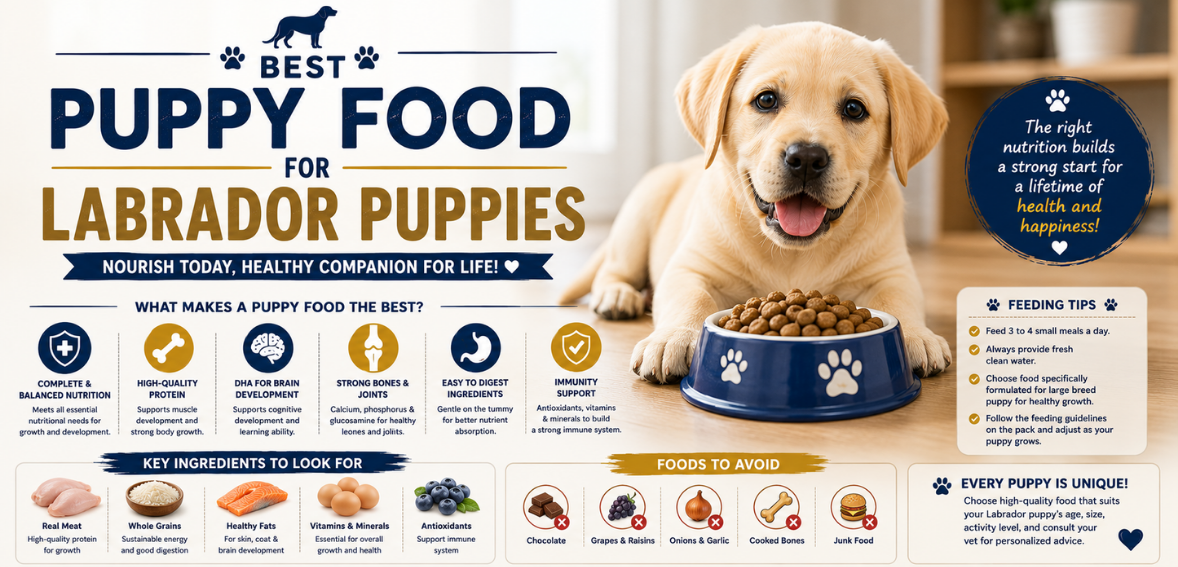
AAFCO’s large-breed growth standard requires calcium levels between roughly 1.2% and 1.8% (dry matter basis), with a controlled calcium-to-phosphorus ratio, specifically to reduce the risk of developmental orthopedic disease in dogs expected to reach 70+ pounds as adults. Regular puppy food has no such upper limit, which can allow calcium intake that outpaces what a large, rapidly growing skeleton can safely process. Given that Labradors are already genetically predisposed to hip and elbow dysplasia, this single formulation detail is one of the most impactful, evidence-backed choices you can make as an owner.
How We Selected These Puppy Foods
Every food on this list was evaluated against the same criteria:
- AAFCO growth (large size) statement, confirming appropriate calcium/phosphorus control
- Named animal protein as the first ingredient, at a level meeting or exceeding AAFCO growth minimums
- Added DHA specifically, rather than only generic “fish meal,” for brain and retinal development
- Feeding-trial verification where available, which is a meaningfully higher bar than lab-formulated-only foods
- Manufacturer transparency and quality-control track record, cross-checked with our reviewing veterinary nutritionist
Top Picks at a Glance
| Pick | Best For | Protein | Price Tier |
|---|---|---|---|
| Purina Pro Plan Large Breed Puppy | Best Overall | ~28% | Mid-range |
| Purina ONE Large Breed Puppy | Best Budget | ~27% | Budget |
| Diamond Naturals Large Breed Puppy | Best Grain-Inclusive Budget | ~26% | Budget |
| Royal Canin Labrador Retriever Puppy | Best Breed-Specific | ~28% | Premium |
| Hill’s Science Diet Large Breed Puppy | Best for Sensitive Stomachs | ~25% | Mid-range |
Best Overall Puppy Food for Labs
Purina Pro Plan Large Breed Puppy (Chicken & Rice Formula)
Real chicken first ingredient · Added DHA · Feeding-trial tested · AAFCO large-breed growth statement
Verdict: The most broadly vet-recommended puppy food for Labs, combining feeding-trial verification with a calcium level specifically controlled for large-breed growth.
This formula includes DHA from fish oil to support brain and vision development, live probiotics for digestive health, and glucosamine for joint support — a well-rounded package for a breed with real orthopedic risk factors.
Pros
- Feeding-trial tested, not just formulated
- Added DHA and glucosamine
- Widely available at a reasonable mid-range price
Cons
- Contains corn and wheat, unsuitable for grain-sensitive puppies
Best Budget and Best Grain-Inclusive Options
Purina ONE Large Breed Puppy
Real chicken first ingredient · AAFCO large-breed growth statement · Lower price point
Verdict: Solid, AAFCO-compliant large-breed puppy nutrition at a meaningfully lower price than premium tiers.
Pros
- Real meat first ingredient at a budget price
- Meets large-breed growth calcium standards
Cons
- Less clinical research backing than premium tiers
Diamond Naturals Large Breed Puppy (Chicken & Rice)
Real chicken first ingredient · Grain-inclusive · AAFCO large-breed growth statement
Verdict: A long-established, straightforward grain-inclusive formula that meets large-breed growth standards without a premium price tag.
Pros
- Established brand with a long market track record
- Grain-inclusive formula suits puppies with no specific sensitivity
Cons
- Fewer added functional ingredients (like probiotics) than premium picks
If you want a formula built specifically around this breed’s proportions and needs, Royal Canin Labrador Retriever Puppy is a worthwhile premium alternative — its kibble shape is designed for the breed’s jaw structure, and the formula targets the joint and coat needs common to Labs specifically. For puppies with sensitive digestion, Hill’s Science Diet Large Breed Puppy offers a gentler formulation with strong clinical research backing, though at a mid-range price point.
Key Nutrients: DHA, Protein, Calcium Ratios
| Nutrient | Target for Lab Puppies | Why It Matters |
|---|---|---|
| Protein | ≥22.5% (AAFCO growth minimum); most quality large-breed foods run 26–30% | Supports rapid muscle and tissue development |
| Fat | ≥8.5% (AAFCO growth minimum) | Concentrated energy for a high-growth, high-activity life stage |
| Calcium | 1.2–1.8% (dry matter) | Supports skeletal growth without overloading developing joints |
| Calcium:Phosphorus ratio | 1:1 to 2:1 | Balanced ratio is as important as the calcium level itself |
| DHA | Present in a meaningful, specified amount (not just generic “fish meal”) | Supports brain and retinal development, especially important in the first few months |
Feeding Schedule and Amounts by Age
| Age | Meals/Day | Approx. Daily Calories |
|---|---|---|
| 8–12 weeks | 3–4 | 400–600 kcal |
| 3–6 months | 3 | 800–1,600 kcal (increasing with weight) |
| 6–12 months | 2–3, transitioning to 2 | Gradually declining toward adult maintenance |
These are general starting ranges — always cross-check against your specific food’s feeding chart and adjust based on body condition. See our full portion guide for how much to feed your Labrador for the complete breakdown across every life stage.
When and How to Transition to Adult Food
Most Labradors are ready to move from puppy to adult food between 12 and 15 months old, once growth has largely leveled off — err toward the later end for larger males. Transition gradually over 7–10 days, mixing increasing proportions of the new food with the old to avoid digestive upset. See our full buyer’s guide to the best dog food for adult Labradors for where to go next.
Frequently Asked Questions
What is the best puppy food for a Labrador?
A large-breed puppy formula with real meat as the first ingredient, added DHA, and controlled calcium levels. Purina Pro Plan Large Breed Puppy is our top overall pick for most healthy Lab puppies.
Do Lab puppies need large breed puppy food?
Yes. Large-breed puppy formulas control calcium and phosphorus specifically to reduce the risk of developmental orthopedic problems in fast-growing large-breed puppies like Labradors, who are already genetically predisposed to hip and elbow dysplasia.
When should I switch my Lab puppy to adult food?
Typically between 12 and 15 months old, once growth has largely leveled off, transitioning gradually over 7–10 days to avoid digestive upset.
How much calcium should Labrador puppy food have?
Roughly 1.2% to 1.8% on a dry matter basis, with a calcium-to-phosphorus ratio between 1:1 and 2:1, per AAFCO’s large-breed growth standard.
What puppy food helps prevent hip dysplasia in Labs?
No food can prevent genetically-driven hip dysplasia entirely, but a large-breed puppy formula with controlled calcium and phosphorus supports moderate, steady growth, which research links to less severe joint conformation outcomes compared to rapid growth from overfeeding.
Once your puppy is fed right, the next step is training with the right rewards.
See our guide to the best treats for training your Labrador →Sources
- Association of American Feed Control Officials (AAFCO) — Dog Food Nutrient Profiles, Growth Statement Requirements
- WSAVA (World Small Animal Veterinary Association) — Global Nutrition Guidelines
- Orthopedic Foundation for Animals (OFA) — Hip and Elbow Dysplasia and Growth Rate