Few dog nutrition topics generate as much genuine disagreement between passionate advocates and cautious veterinary bodies as raw feeding. This guide lays out what a raw diet actually is, the real (not exaggerated) benefits and risks on both sides, what the AVMA and FDA specifically say, and how to approach it safely if you decide to go this route.
What a Raw Diet Is (BARF vs. Prey Model)
Raw feeding generally falls into two overlapping approaches:
- BARF (Biologically Appropriate Raw Food): Raw muscle meat, bone, organ meat, plus some vegetables, fruit, and sometimes supplements, aiming to mimic an ancestral diet while including plant matter.
- Prey Model Raw (PMR): A stricter approach modeling a whole prey animal’s composition — typically all meat, bone, and organ, with no plant matter at all.
Both can be homemade or purchased as commercially prepared raw products (fresh or frozen), which vary widely in whether they’re formulated to meet complete AAFCO nutrient standards.
Potential Benefits for Labradors
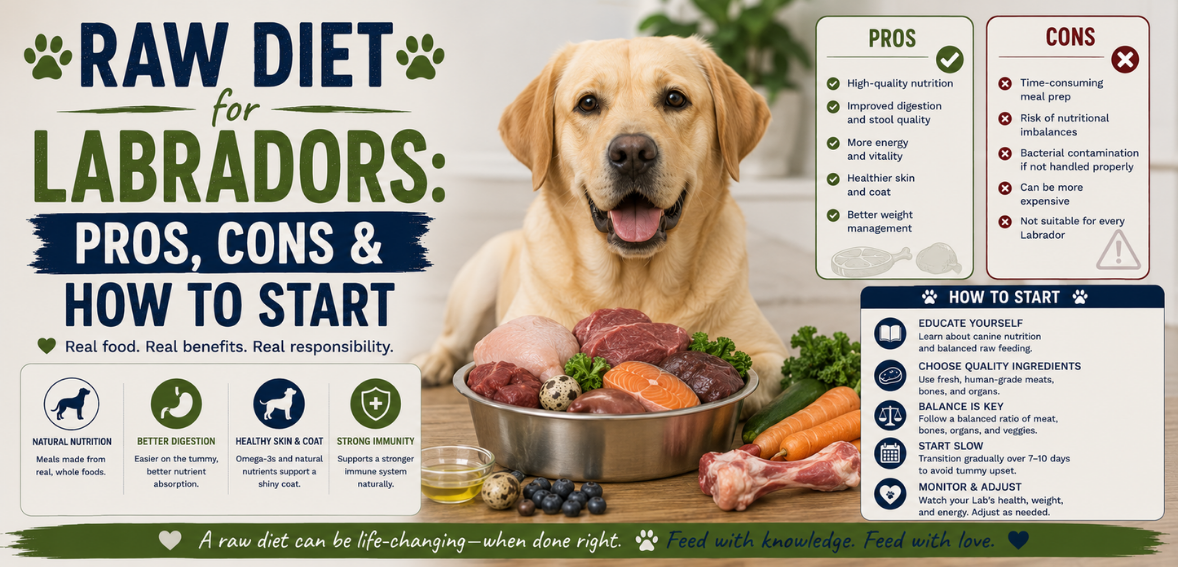
- Smaller, firmer stools — commonly reported by raw-feeding owners, plausibly linked to higher digestibility of some raw ingredients
- Shinier coat and reduced shedding — anecdotally reported often, though not conclusively demonstrated in controlled studies specific to raw diets
- Owner-controlled ingredient sourcing, useful for dogs with specific known food sensitivities
- Some dental benefit from raw meaty bones, through mechanical scraping during chewing, though this comes with its own tooth-fracture risk (see below)
Many of these reported benefits are genuinely experienced by owners but haven’t been rigorously proven in controlled comparative studies against high-quality commercial diets — worth keeping in mind before assuming raw is definitively superior on these points.
Risks and Downsides (Bacteria, Nutritional Imbalance, Cost)
A 2022 University of Liverpool study published in the Journal of Small Animal Practice found raw-fed dogs had significantly higher rates of antimicrobial-resistant E. coli (54% vs. 17% in non-raw-fed dogs) and were the only group in which Salmonella was detected in feces at all (4% of raw-fed dogs). This matters not just for the dog, but for human household members exposed to contaminated feces, saliva, or food-prep surfaces.
- Bacterial and parasitic contamination: Raw meat can carry Salmonella, Campylobacter, E. coli, Listeria, and parasites, posing risks to both dogs and the humans handling their food and waste
- Nutritional imbalance: Studies of homemade raw recipes have repeatedly found many fall short of complete and balanced nutrition, particularly in calcium, vitamin, and trace mineral levels, unless specifically formulated by a veterinary nutritionist
- Bone-related risks: Raw bones can cause tooth fractures, and any bone (raw or cooked) carries some choking or internal injury risk if swallowed improperly
- Cost and time: Sourcing quality raw ingredients, safe storage, and meal prep typically demand more time and money than commercial kibble
What Vets and AVMA/FDA Say
The American Veterinary Medical Association’s official policy discourages feeding raw or undercooked animal-source protein to dogs and cats specifically because of documented risk to both animal and human health, and supports diets processed to reduce or eliminate pathogen risk instead. The FDA has issued similar cautions, citing Salmonella and other pathogen concerns tied to raw pet food. That said, this remains a genuinely debated area within veterinary medicine — some individual vets, particularly those with an integrative or holistic focus, support carefully managed raw feeding, while acknowledging the same underlying risks the AVMA cites. Both perspectives agree on one point: if you choose raw, sourcing, handling, and nutritional formulation all matter enormously to safety.
Is Raw Safe for Lab Puppies?
This deserves extra caution specifically for Labradors. Large-breed puppies require tightly controlled calcium and phosphorus ratios during their rapid growth period to reduce the risk of developmental orthopedic problems — a risk this breed already carries genetically. A poorly balanced homemade raw diet during this exact growth window carries real skeletal risk on top of the general pathogen concerns that apply at any age. If you’re considering raw for a Lab puppy specifically, working with a board-certified veterinary nutritionist to formulate (not just “roughly balance”) the recipe is especially important, given how much is at stake during this developmental window. See our full Labrador puppy feeding schedule for the calcium/phosphorus targets any diet, raw or otherwise, should meet.
How to Build a Balanced Raw Meal (Ratios)
| Component | Typical Ratio (Prey Model Style) | Purpose |
|---|---|---|
| Muscle meat | ~80% | Primary protein source |
| Raw edible bone | ~10% | Calcium and phosphorus source |
| Liver | ~5% | Vitamin A and other nutrient density |
| Other secreting organ | ~5% | Additional micronutrients |
These ratios are a commonly cited starting framework, not a guarantee of complete nutrition — hitting the right percentages doesn’t automatically ensure every vitamin and trace mineral requirement is met. This is exactly why nutritionist-formulated recipes (commercial or custom) carry real value over an approximate homemade ratio, especially long-term.
How to Transition Your Lab to Raw Safely
- Consult your vet first, especially to rule out any condition that would make raw feeding inadvisable, and to discuss a specific, nutritionally complete formulation plan.
- Source high-quality, human-grade ingredients from suppliers with good food-safety practices, since ingredient quality directly affects contamination risk.
- Transition gradually over 7–10 days, mixing increasing amounts of raw with decreasing amounts of the current food to reduce digestive upset.
- Practice strict food-safety hygiene: separate cutting boards and utensils, thorough handwashing, and prompt cleaning of feeding areas, treating raw pet food prep like raw meat prep for human food.
- Monitor stool quality, energy, and coat condition over the following weeks, and revisit the plan with your vet if anything seems off.
Cost and Practical Considerations
- Cost: Raw diets, whether commercial or homemade, typically cost more per month than a comparable-quality kibble, due to ingredient and storage costs
- Storage: Requires meaningful freezer space and a consistent thawing/prep routine
- Time: Meal prep, sourcing, and cleanup add real time investment compared to scooping kibble from a bag
- Travel and boarding: Raw feeding can complicate travel, boarding, or pet-sitting logistics compared to shelf-stable commercial food
See our full buyer’s guide to the best dog food for Labradors for how commercial options compare on cost and convenience, and our common Labrador health problems guide for the broader nutritional and health picture this decision fits into.
Frequently Asked Questions
Is a raw diet good for Labradors?
The evidence is genuinely mixed. Some owners report benefits like smaller stools and a shinier coat, but the AVMA and FDA both caution against raw feeding due to documented pathogen risks, and DIY raw diets often fall short of complete nutrition unless professionally formulated.
What are the pros and cons of raw feeding a Lab?
Pros commonly cited include smaller stools, coat improvements, and ingredient control. Cons include documented bacterial contamination risk, frequent nutritional imbalance in homemade recipes, higher cost, and added time for sourcing and prep.
How do I start my Labrador on a raw diet?
Consult your vet first, source high-quality ingredients, transition gradually over 7-10 days, and follow strict food-safety hygiene practices during prep. A nutritionist-formulated recipe or complete commercial raw product reduces the risk of nutritional gaps.
Is raw food safe for Labrador puppies?
This requires extra caution, since large-breed puppies need tightly controlled calcium and phosphorus during rapid growth to reduce orthopedic risk. A poorly balanced homemade raw diet during this window carries real skeletal risk on top of general pathogen concerns, making professional nutritional formulation especially important for puppies.
What should be in a raw diet for a Labrador?
A commonly cited prey-model starting ratio is roughly 80% muscle meat, 10% raw edible bone, 5% liver, and 5% other secreting organ, though hitting these ratios doesn’t guarantee complete nutrition — nutritionist-formulated recipes are the more reliable path to avoiding deficiencies.
Weighing raw against commercial options?
See our full buyer’s guide to the best dog food for Labradors →Sources
- American Veterinary Medical Association (AVMA) — Raw or Undercooked Animal-Source Protein in Cat and Dog Diets (policy statement)
- U.S. Food and Drug Administration (FDA) — Raw Pet Food Safety Guidance
- Groat, E.F., et al. “UK dogs eating raw meat diets have higher risk of Salmonella and antimicrobial-resistant Escherichia coli faecal carriage.” Journal of Small Animal Practice, 2022.
- Canadian Veterinary Medical Association — Safety of Raw Meat-Based Pet Food Products (position statement)